

There Was No Assassination Attempt
A thorough investigation into Trump's so called assassination attempt because no one else seems willing to do so

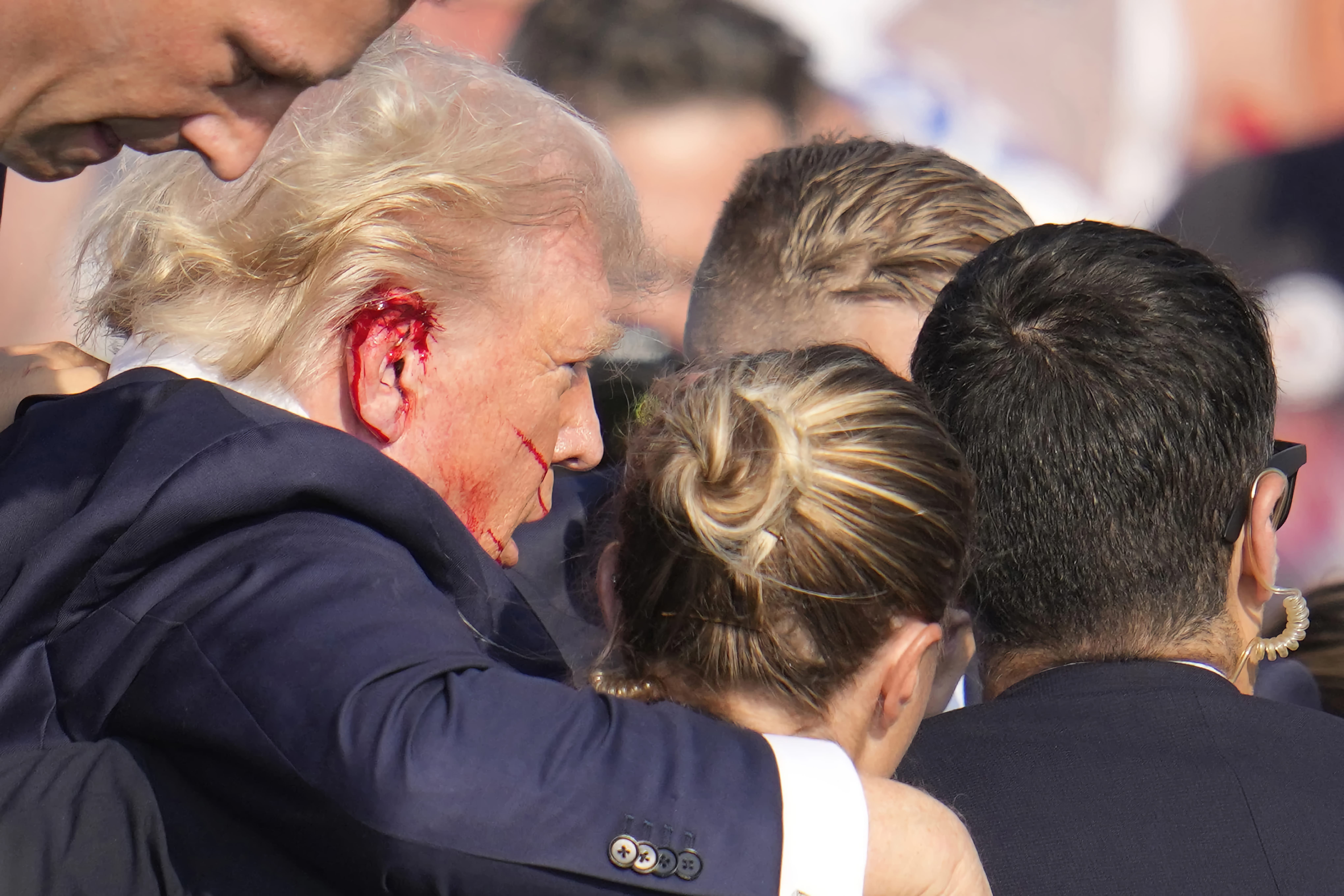
Blood on the Podium: The Attempt in Butler, Pennsylvania
Donald Trump stood behind the podium under a clear July sky in Butler, Pennsylvania, barely six minutes into his campaign speech, when a sudden volley of gunshots cracked the air. In an instant, chaos erupted. Trump clutched at his right ear, his fingers coming away bloody. Secret Service agents lunged onto the stage, dragging the former president to the ground as panicked supporters screamed and ducked for cover. “Shooter is down!” someone shouted moments later. Amid the bedlam, Trump’s signature red cap had been knocked askew, his hair mussed and blood streaking down the side of his face.
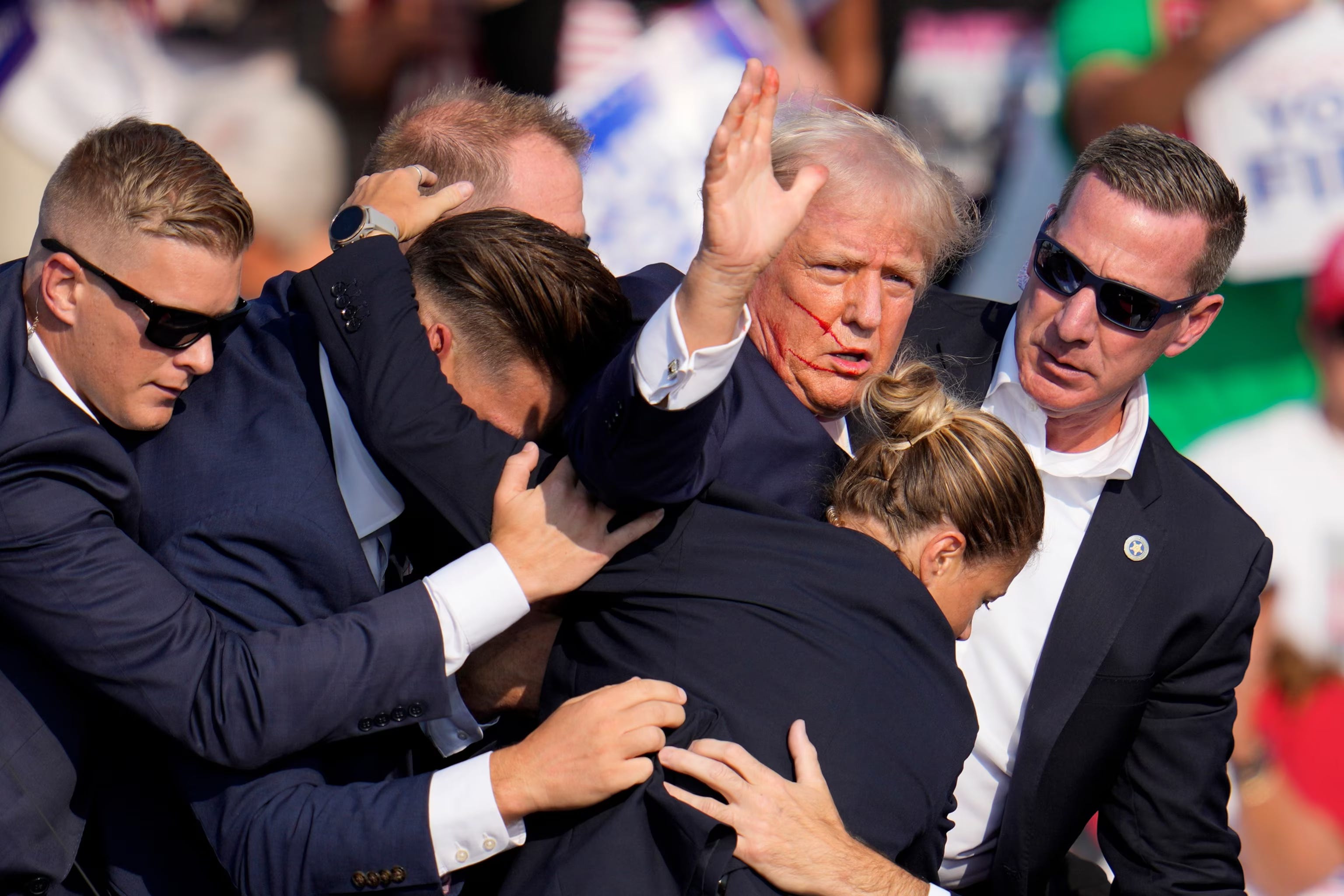
Yet in those surreal seconds, Trump’s instinct for theatrical defiance flashed through. As agents hauled him upright, before assessing the safety of the situation to evacuate, he steadied himself—insisting, “Wait, wait, wait”—and then thrust a clenched fist toward the crowd, mouthing “Fight! Fight! Fight!”. The image of a bloodied Trump, fist raised in front of a giant American flag, would later be described as “instantly iconic…one for the history books”. Rallygoers broke into chants of “USA! USA!” as he was hurried into an SUV and whisked away.
The attempted assassination of a former U.S. president should have been a clear-cut tragedy. But almost a year later, unsettling questions linger beneath the official narrative. Was this dramatic brush with death exactly what it seemed? Or was the spectacle of Trump’s survival carefully stage-managed for political gain?
This investigation explores an unsettling possibility: that the July 13 attempt on Trump’s life may have been staged or strategically manipulated. Such a claim is extraordinary – even outrageous. Yet a close examination of the physical evidence, the carefully crafted narratives around the victims, Trump’s own curious silence afterward, and historical parallels in Trump’s political career reveals a pattern of narrative control that demands scrutiny. If we value democracy, we must investigate whether violence itself is being manipulated as political theatre.
A Graze Too Amazing? Ballistics and the Mystery of Trump’s Wound
The official account is, on its face, astonishing: A young assassin fired eight rounds from an AR-15–style rifle at fairly close range. Yet Trump escaped with only a 2-centimeter (or almost the size of a quarter-dollar) graze on the upper edge of his right ear. Former White House physician Ronny Jackson – now a Republican congressman – examined Trump and described “significant bleeding” and swelling, but notably no need for stitches. In a letter one week later, Jackson wrote that the bullet came “less than a quarter of an inch from entering his head” before coursing through the cartilage of the ear. Trump was bandaged up and back on the campaign trail within 48 hours, apparently none the worse for wear.
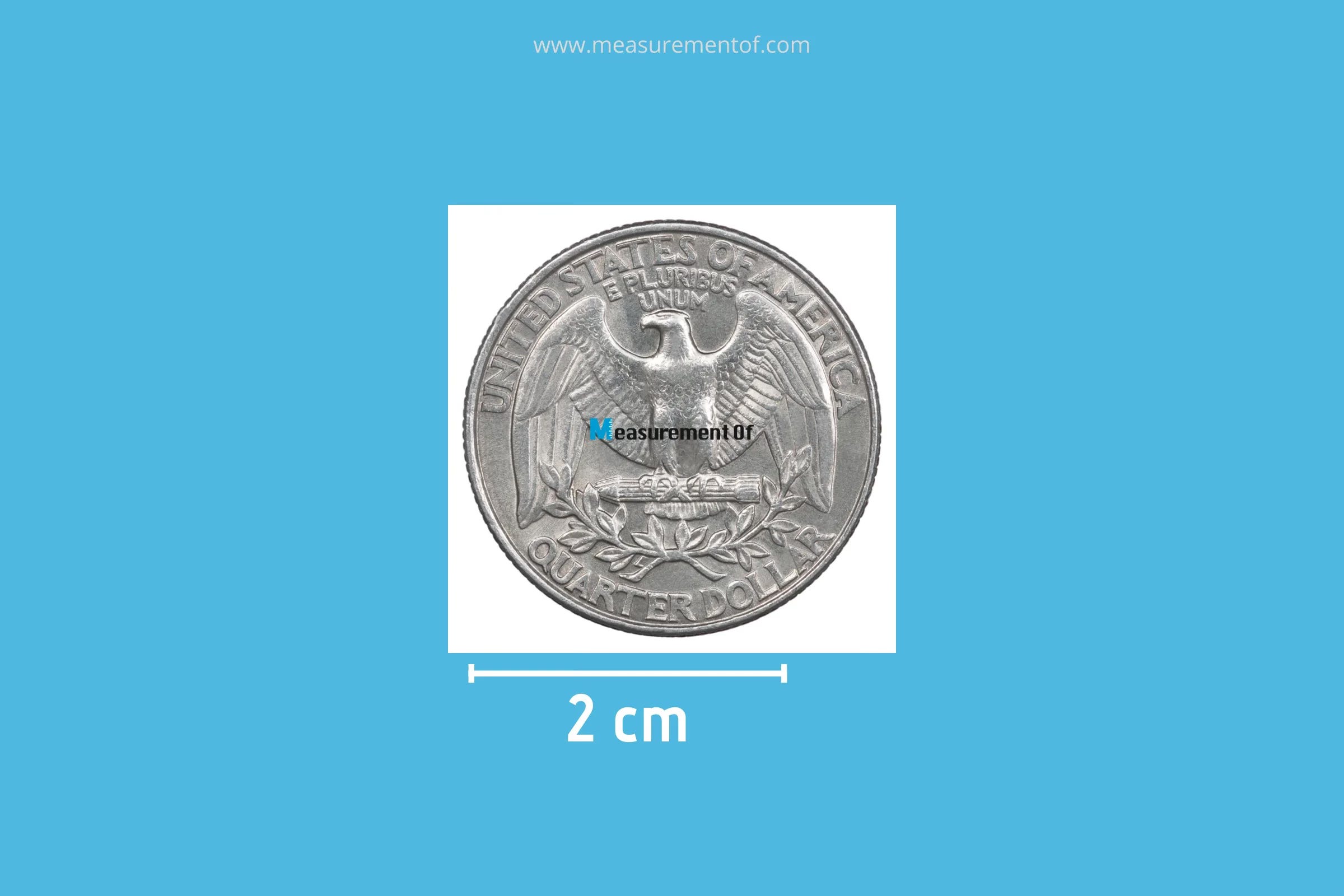
How plausible is this miraculous escape? Ballistics and trauma experts are divided. FBI Director Christopher Wray openly cast doubt on Trump’s version, telling Congress there was “some question about whether or not it’s a bullet or shrapnel that hit his ear.” The FBI had not even conclusively determined what struck Trump, Wray said, underscoring the ambiguity of the injury. Trump reacted with fury, insisting on social media that “it can only be a bullet.” But his certainty is not universally shared. “Donald Trump was clipped in the ear by something, and while many experts believe it was a bullet, not shrapnel or debris, FBI Director Christopher Wray is withholding judgment until after the bureau’s investigation is complete,” The Independent reported . Outside analysts note that without full forensic transparency – such as ballistics reports or medical records – no one can say for sure what actually grazed Trump that day.
What we do know raises as many questions as answers. An AR-15 fires 5.56mm rounds at roughly three times the speed of sound – bullets designed to inflict catastrophic tissue damage. One trauma surgeon noted that the ear’s cartilaginous rim could be “pierced” by a high-velocity round without completely severing the ear, especially if the contact was fleeting. A forensic analysis by The New York Times used 3D modelling to track one bullet’s trajectory and concluded that a bullet likely did graze Trump’s ear directly. In that analysis, the round traveled in a straight line from the rifle, nicked Trump, then continued into the crowd – suggesting it did not fragment or strike another object first. This aligns with Trump’s claim of a “whizzing” projectile that felt like “the world’s largest mosquito” as it ripped past him .
Though that makes for a nice visual, it makes for poor forensics. The official account insists Trump’s ear was grazed by a high-velocity 5.56mm bullet, leaving only a superficial wound. But trauma surgeons and forensic pathologists are openly sceptical. At close range, a round of that velocity should not only tear cartilage, but create a shockwave strong enough to rupture the eardrum, cause severe hearing loss, and risk fracturing the skull’s temporal bone. Instead, Trump presented with a mere scrape, no stitches, no documented hearing loss, and was back on stage—miraculously unaffected. Not a single trauma team report or audiology exam has ever been released. In medicine, we call that not a miracle, but a mystery—and a red flag. But on the other hand, the tightly controlled information about his wound invites skepticism. Trump’s team refused to release medical records or allow the treating physicians to brief the press. Aside from Dr. Jackson’s brief letter, no independent medical testimony has confirmed the nature of the injury. “Trump’s team has largely remained tight-lipped about the ear wound, refraining from publicly sharing the former President’s medical records or conducting a press briefing at the hospital where he was treated,” Time reported shortly after the incident . This secrecy is unusual for a candidate who survived an assassination attempt – one might expect them to showcase every detail of their miraculous survival. Instead, the wound’s specifics remain oddly opaque, fuelling online speculation. Most notably – cartilage does not regrow.
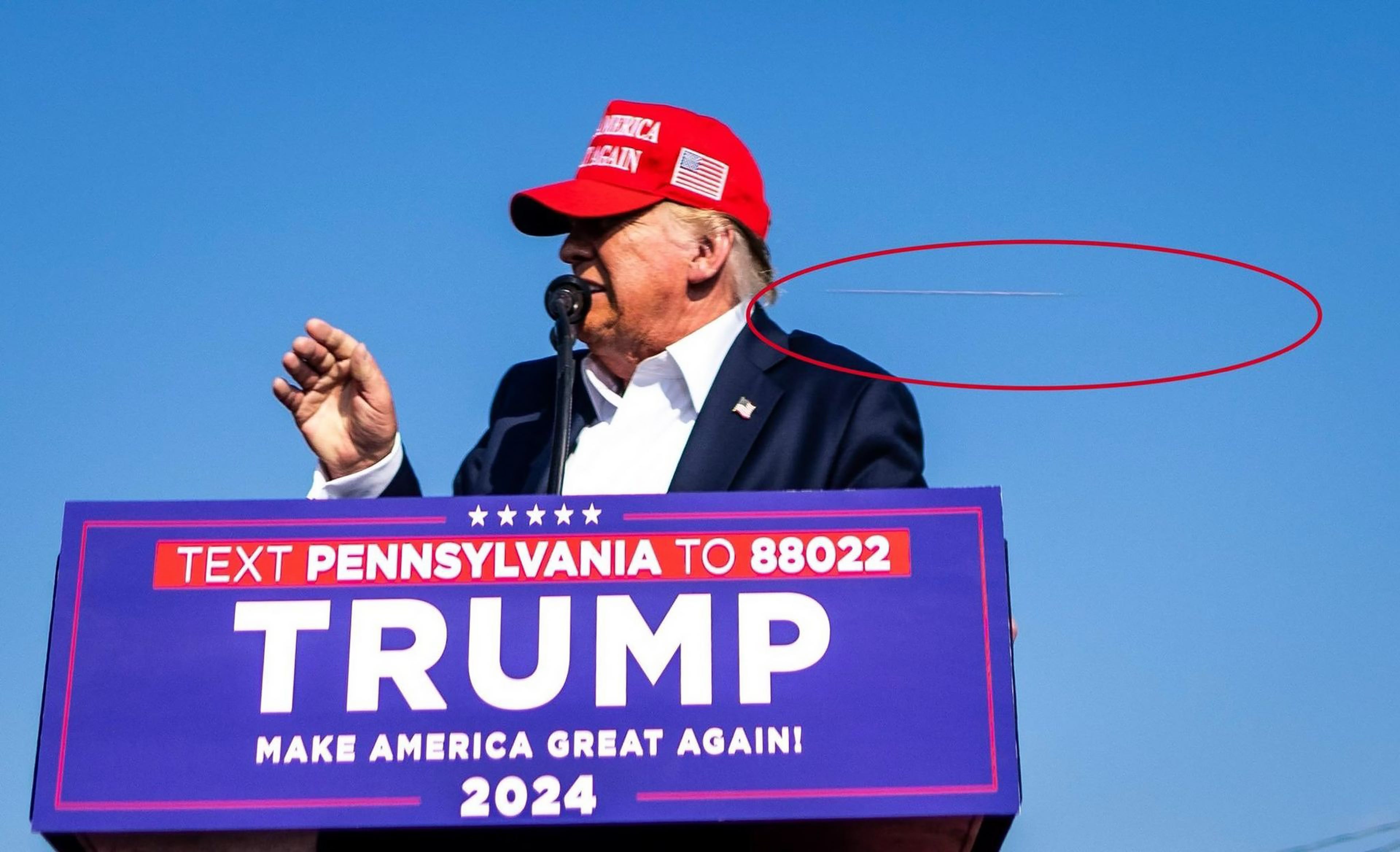
Indeed, conspiracy theories bloomed almost immediately. Within hours of the shooting, social media users claimed Trump was never shot at all – that the blood on his ear was “fake” and the attack “staged” by his campaign, pointing to the minimal injury and the agents’ response as evidence. Fact-checkers swiftly debunked many of these baseless posts by pointing to extensive video and eyewitness proof that shots were fired and Trump did bleed. But the fact-checkers could not definitively answer what caused Trump to bleed, either. Photos taken by Doug Mills of the immediate after-math shows Trump’s hand pulled from his ear, bloodless.
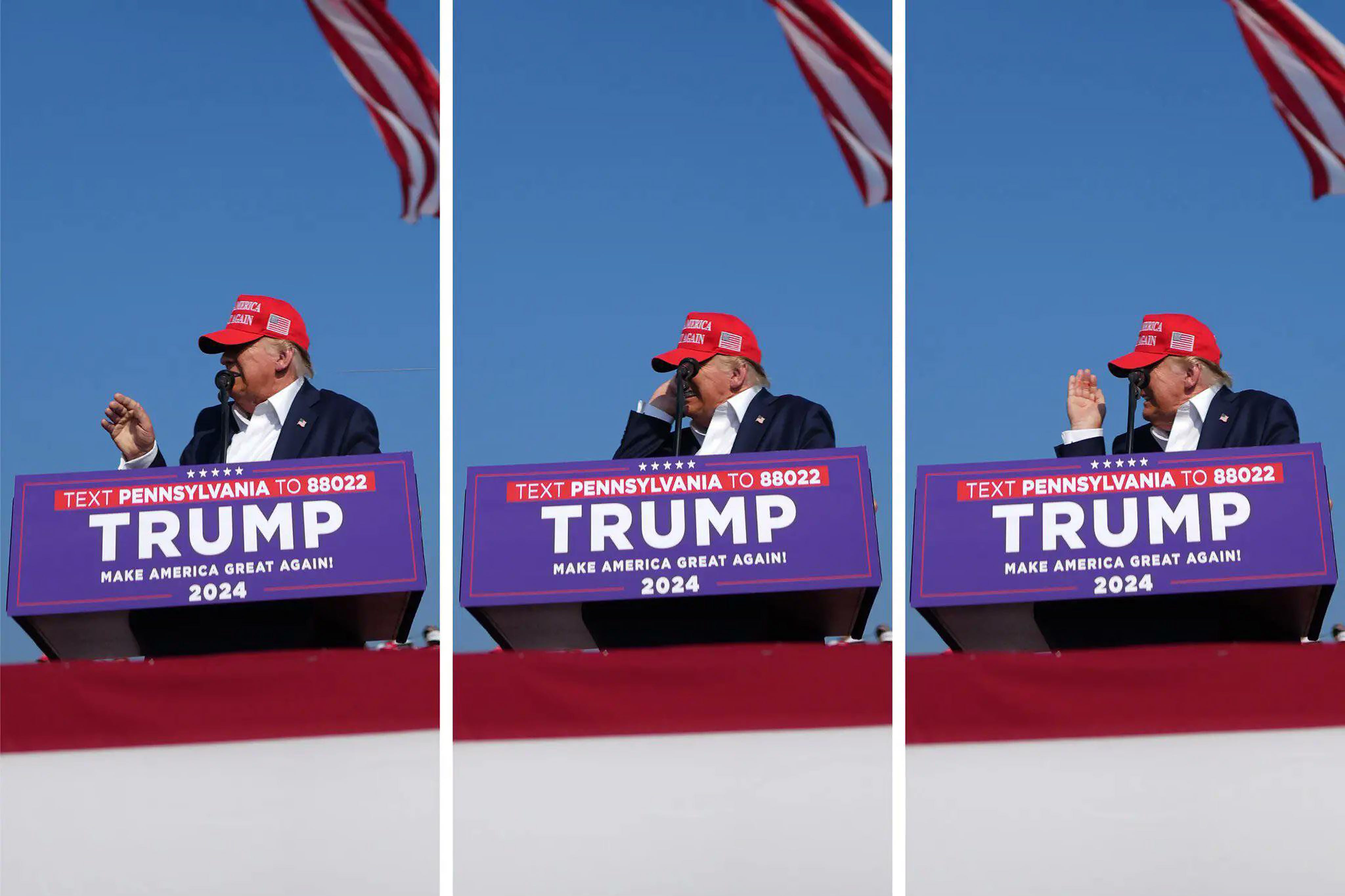
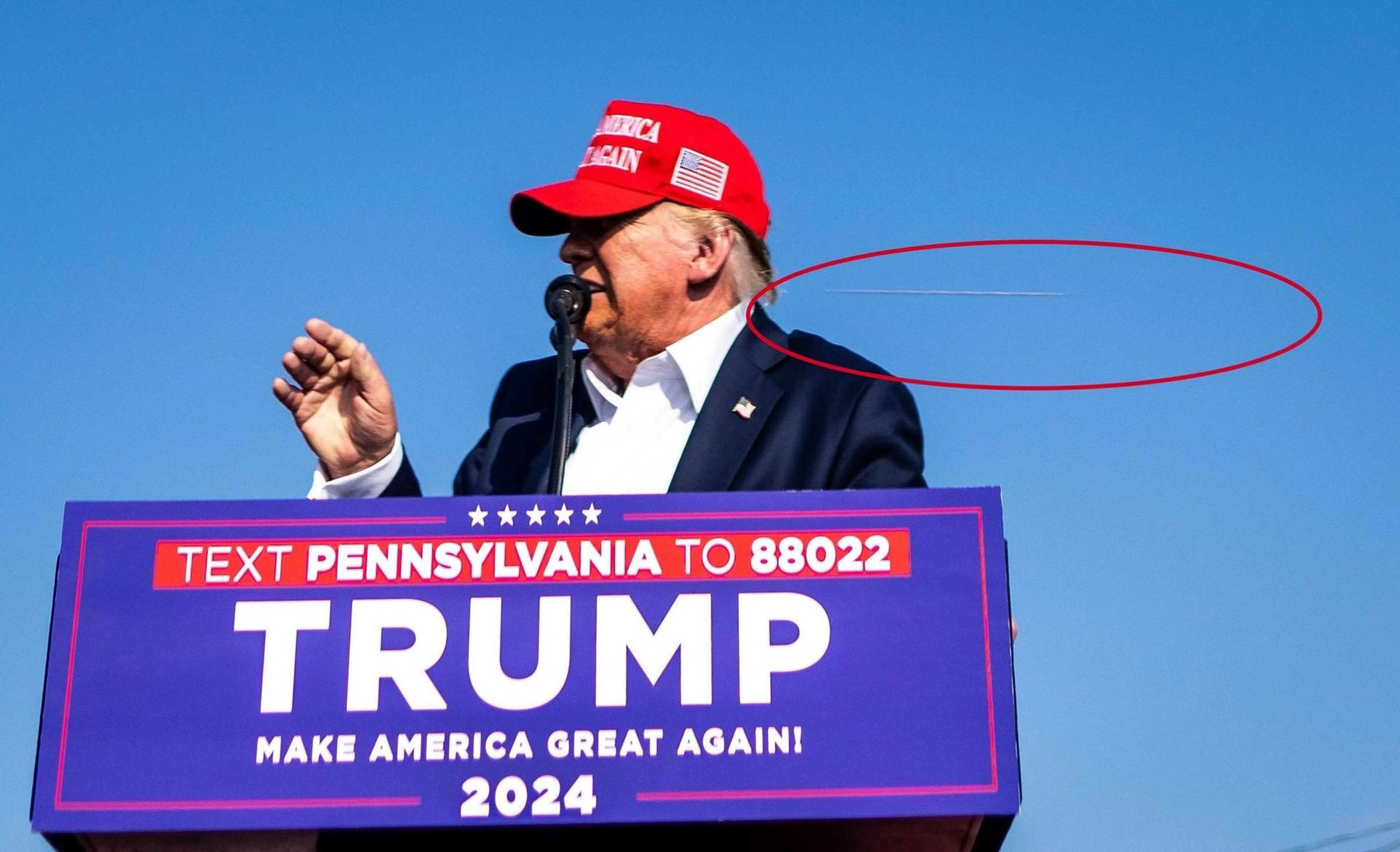
Doug Mills rapid sequence photos. First frame: Bullet misses Trump (see closeup below) Second frame: Trump grabs ear. Third frame: No blood
As days passed, even some Trump allies began questioning the incident – albeit casting blame toward Trump’s enemies. By late August, Monica Crowley, a conservative commentator interviewing Trump, mused on air: “The more we see what happened that day, the more suspicious it all looks.” Crowley insinuated that “the three-letter agencies” might be concealing evidence or involved somehow. Trump agreed that “something strange” was afoot, hinting that the FBI or others could be “slow-walking” the investigation for nefarious reasons. Ironically, while pro-Trump conspiracists cast the incident as a deep-state plot against Trump, an alternate theory has gained quiet traction in other circles: that the spectacle was an inside job by Trump’s own camp, orchestrated to create a hero narrative.
What makes this idea conceivable – however shocking – is how perfectly the outcome served Trump’s political needs, while doing remarkably little physical harm to him. The physics of the wound may be explainable as luck; but it was luck of a miraculous sort. A high-powered rifle round flew true towards its target, yet delivered only a flesh wound that required no stitches and left Trump hospitalised for mere hours. And miraculous regrowth of cartilage with no scarring weeks later. Meanwhile that same volley of gunfire provided Trump with an image that would define his campaign – the defiant candidate, blood on his face, roaring “Fight!” with a fist in the air as he stared down death. As we examine next, the human cost of that volley only amplifies the event’s dramatic usefulness – and raises disturbing questions about how “real” or pre-arranged those sacrifices may have been.
Martyrs, Heroes, and Decoys: The Curious Fates of Three Supporters
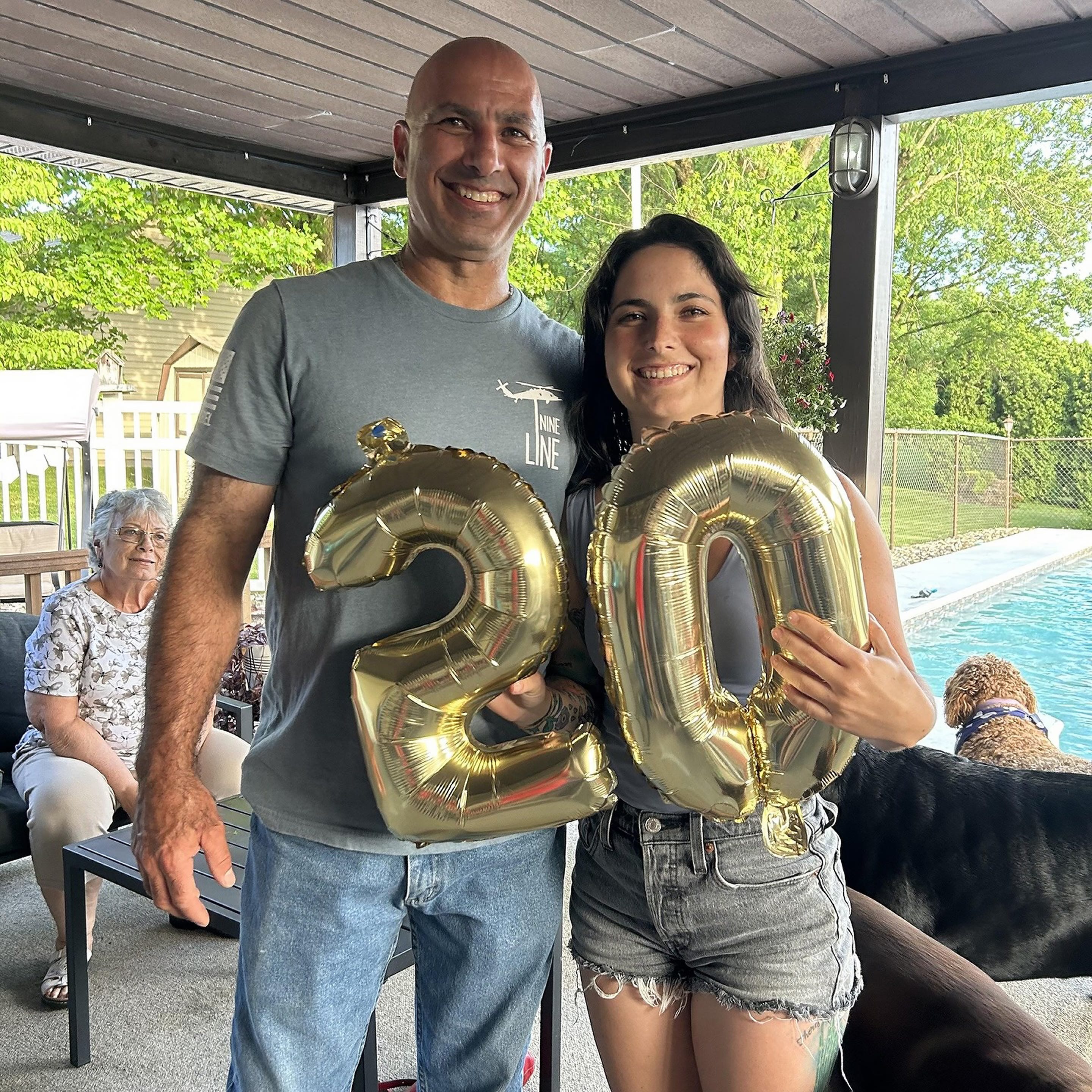
Beyond Trump’s grazed ear, the Butler rally shooting had three other victims whose stories could be torn from a political screenplay. Corey Comperatore, a 50-year-old firefighter, died after diving in front of his wife and daughter to shield them from bullets. In the panic, Comperatore threw his family to the ground and took the fatal round himself – an act of self-sacrifice that led Pennsylvania’s governor to eulogise him as a hero who “died a hero… loved his family”. Comperatore’s grieving daughter wrote that her father “truly loved us enough to take a real bullet for us,” calling him “the best dad a girl could ever ask for.” The narrative of the Fallen Hero Father spread quickly, with headlines across the nation praising the firefighter who gave his life to save his family.
Meanwhile, David Dutch, 57, and James Copenhaver, 74, miraculously survived their gunshot wounds. Dutch, a long-time Trump supporter and former Marine, was hit in the chest and abdomen . He suffered a lacerated liver and broken ribs, spent days in a medically induced coma, and required multiple surgeries . Yet within two weeks he was on the mend, issuing a statement thanking first responders and trauma surgeons “who saved his life”. Copenhaver, by contrast, is a retired accountant and registered Democrat from Moon Township who had become interested in local GOP politics . He was critically injured (reports suggest a neck or shoulder wound), but stabilized after intensive care. From his hospital bed, the 74-year-old expressed “thoughts and prayers for the other victims, their families, and President Trump,” pointedly wishing Trump a “safe and speedy recovery” alongside his fellow rally-goers.
In Comperatore, Dutch, and Copenhaver, the rally shooting produced a trinity of archetypes almost too perfect in their symbolism. One martyr is an unquestioned hero – a churchgoing family man literally dying for his loved ones and (by extension) for the cause . Another is a veteran – a Marine Corps League member, wounded in action while exercising his patriotic rights at a political rally . The third is an elderly convert – a former Democrat whose presence underscores Trump’s cross-partisan appeal, now bleeding for a candidate he only recently embraced . It is as if each man represents a narrative chapter: sacrifice, duty, and unity.
Of course, these were real people, not characters in a play. They did not choose to be shot for someone’s politics. Comperatore’s death is a genuine tragedy, and Dutch and Copenhaver face long roads to heal. Yet the political utility of their stories was immediate and immense. Trump’s surrogates and right-wing media instantly wove the heroism of the victims into Trump’s campaign messaging. At the Republican National Convention just days later, Trump opened his nomination acceptance speech by invoking the rally victims. He led a moment of silence for “our beautiful Corey,” telling the nation that Comperatore had “become somewhat of a folk hero” . He praised Dutch and Copenhaver as brave patriots. The message was clear: Trump’s people are willing to die for him – and in turn, he is willing to “never stop fighting” for them. In Milwaukee, Trump framed his survival as nearly divine providence: “If I had not moved my head at that very last instant, the assassin’s bullet would have perfectly hit its mark and I would not be here tonight… By the grace of Almighty God, I’m here.” This near-miss, and the hero’s death that prevented a greater bloodbath, became a rallying cry. Supporters at subsequent events chanted “Fight! Fight! Fight!” – echoing Trump’s own fist-pumping declaration as he bled on July 13. The bloody-ear photo was emblazoned on T-shirts and even Christmas ornaments for sale, eclipsing Trump’s infamous mug shot as the defining image of the 2024 campaign.
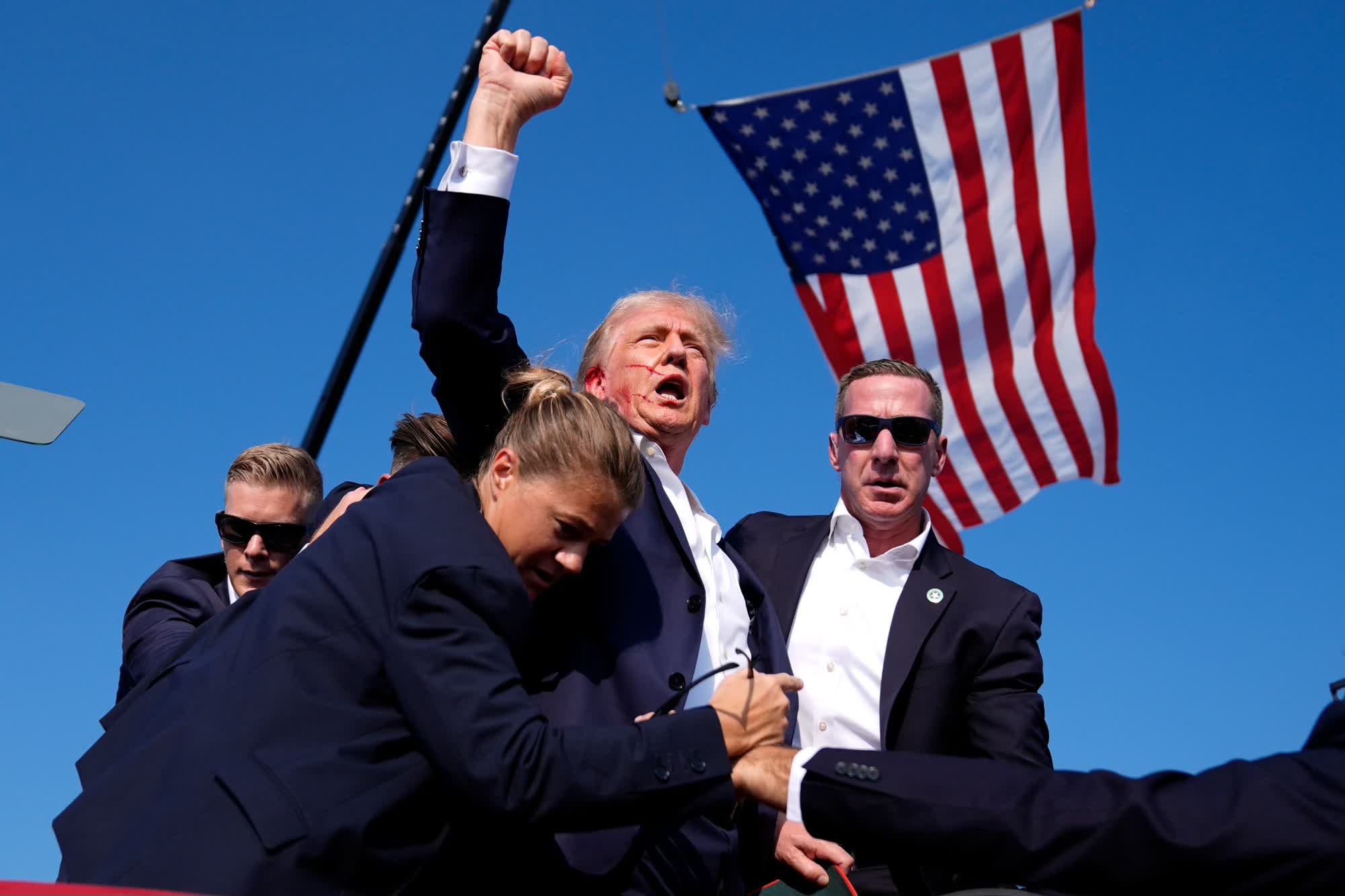
The now head of Secret Service staring down the lens to ensure the photographer is in the right place for the photo
All of this raises a disquieting question: Were these people’s fates simply twisted fortune? Or were they, in some dark design, intended to add credibility to a staged assassination attempt? History is rife with allegations that violent incidents have been orchestrated to manipulate public sentiment. The idea of sacrificing one’s own supporters for political theater is ghastly. But we must consider: if one were to fake an assassination attempt convincingly, would it not look exactly like this? A leader only superficially wounded – enough to bleed and inspire sympathy, not enough to disable. Loyal followers struck down around him, proving that the threat was deadly real. A villain conveniently killed at the scene, silencing any chance to probe motive or method.
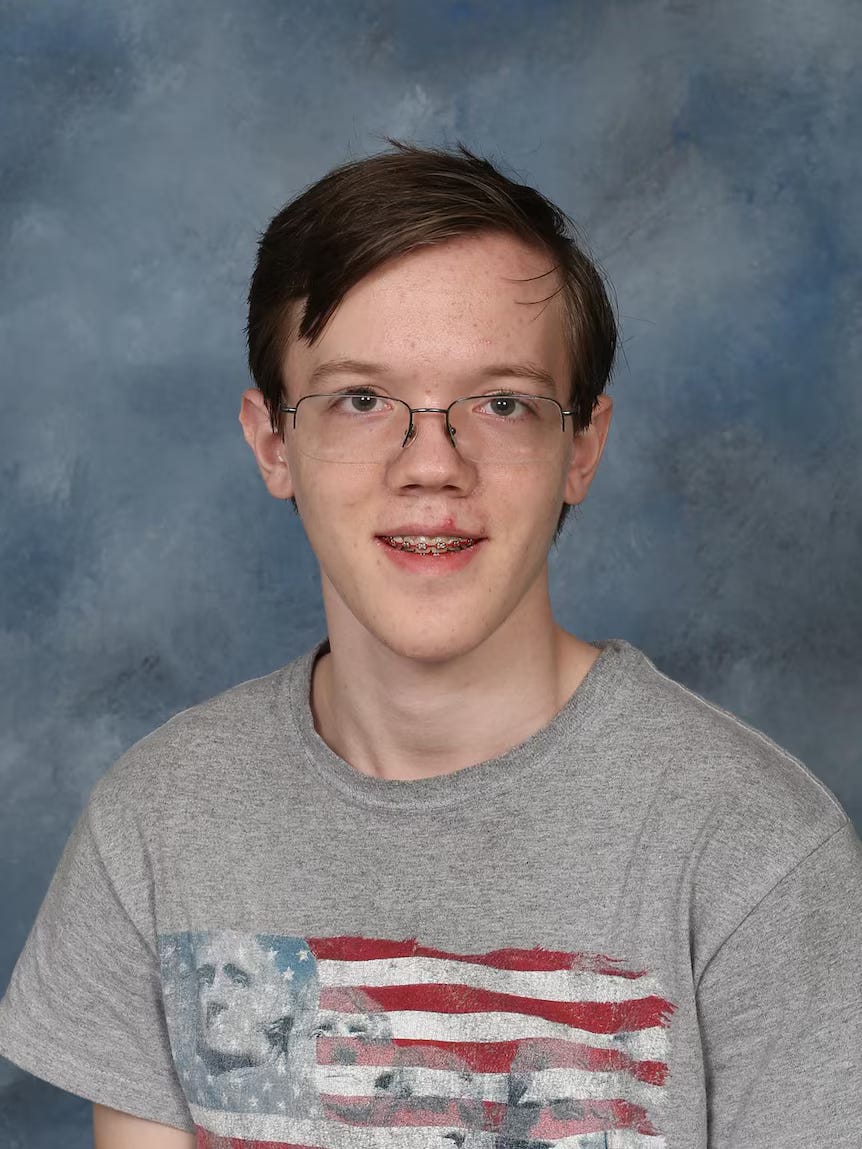
Certainly, plenty of evidence indicates the Butler shooting was an actual attempt by a lone wolf assailant. The shooter, Thomas Matthew Crooks, was a local 20-year-old with no criminal record who spent months plotting the attack in secret. He researched sniper distances used in the JFK assassination, suggesting he sought to mimic Lee Harvey Oswald’s deadly feat. Crooks even flew a drone over the fairgrounds to scout Trump’s venue hours before the rally – a chillingly real preparation for murder. This was no crisis actor, but an obsessive would-be assassin. For skeptics of the “staged event” theory, these facts close the case: Crooks acted alone, nearly succeeded, and only sheer luck spared Trump’s life.
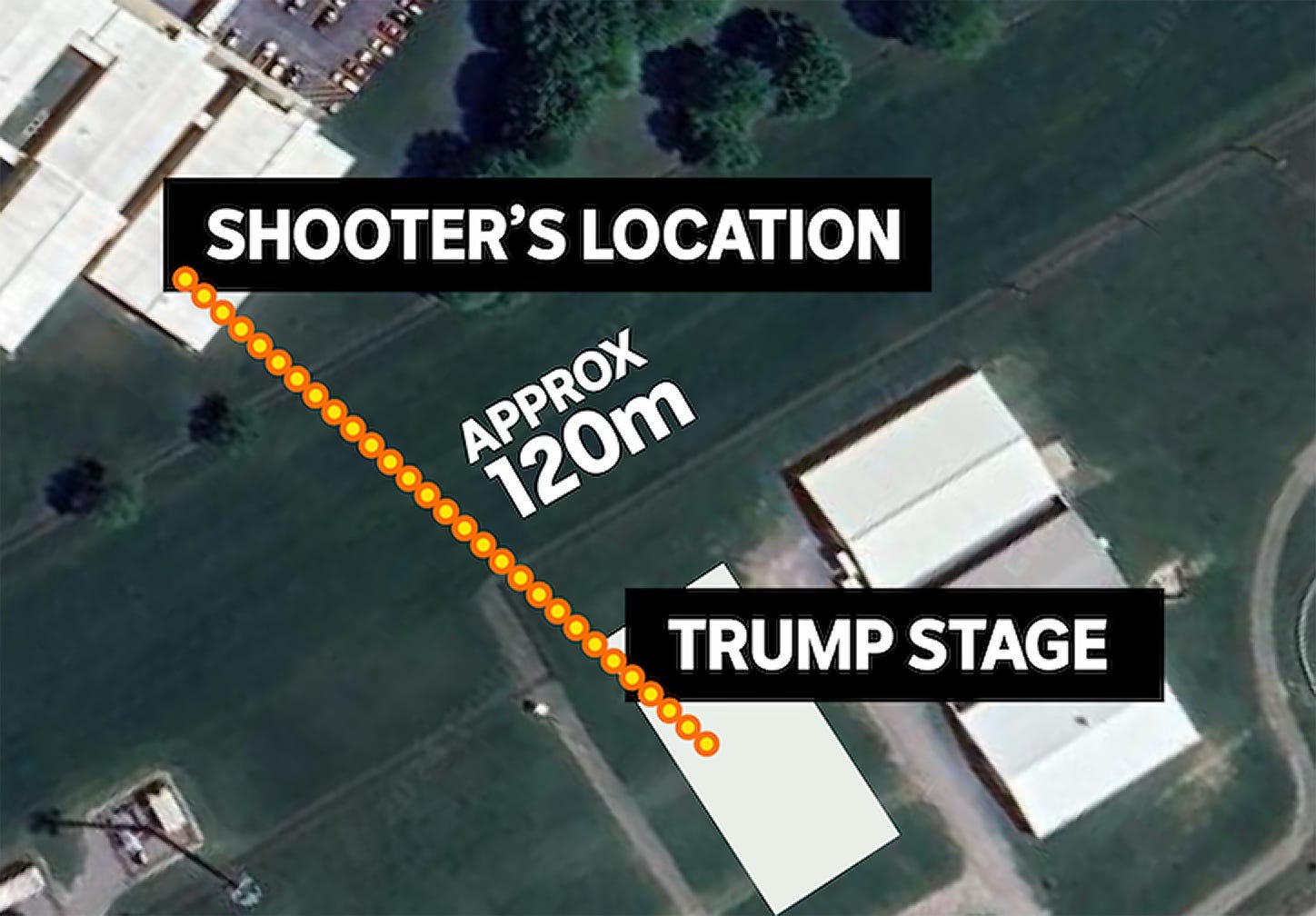
Yet even within those facts, the suspicious patterns emerge. Crooks’ elaborate planning ironically highlights security failures that are hard to fathom – failures that some experts find too convenient. A team of local sniper officers actually spotted Crooks in the rally crowd an hour before the shooting and deemed him suspicious. They alerted the Secret Service command, sent photos of Crooks, and were told the Secret Service was aware. Incredibly, those officers then left their rooftop observation post to search for Crooks on foot – at which point Crooks slipped onto another roof unobserved. Minutes later, he opened fire from that very rooftop which had been left unwatched. Investigations later revealed that Secret Service communications were siloed and patchy that day; local police and federal agents were not in constant radio contact. The Secret Service even skipped the morning security briefing with local SWAT teams on the day of the rally. Whether due to arrogance or miscoordination, these lapses allowed a lone gunman to get alarmingly close to achieving his goal. The agency’s director eventually resigned under congressional pressure, admitting in a hearing, “we failed.”
For a conspiracy-minded observer, these failures could be interpreted in a more sinister light. Was the Secret Service’s stunning negligence simply a perfect storm of human error? Or could someone on the inside have deliberately stood down key security measures to ensure Trump’s staged near-death drama could play out unhindered? It is a disturbing hypothesis. But consider that Trump’s team controlled key aspects of the narrative from the start: by limiting medical disclosures, by immediately framing the hero stories, and by swiftly neutralising the shooter. If one were scripting this event, one would ensure the lead actor (Trump) is safe, the villain is eliminated, and only the intended narrative beats remain. Comperatore’s heroic sacrifice, captured in his daughter’s poignant eulogy, became a campaign talking point within hours. Elon Musk – tech billionaire nazi – even cited the rally shooting as a reason he decided to endorse Trump, saying the attempt “clarified” the stakes of the election. In terms of political theatre, the Butler incident was an instant blockbuster, eliciting shock, sympathy, unity, and even endorsements.
None of this is conclusive evidence of staging. But it underscores how politically opportune the violence was for Trump. One is reminded of the classic film Wag the Dog, where a fake war is concocted to boost a president’s ratings. Here, a seemingly genuine attempt on Trump’s life occurred – yet it unfolded in a way that maximised emotional impact while minimising actual harm to its principal target. That duality is exactly what a stage-managed “false flag” operation would seek to achieve. And history offers unsettling parallels for such tactics.
Trump’s Pattern of Spectacle: When Reality Blurs with Theatre
Donald Trump’s life in politics has been defined by showmanship – sometimes bleeding into outright deception. As a candidate and president, he often blurred the line between reality TV and reality. Some incidents in his career invite questions about how far he would go to manufacture a narrative.
Consider a precedent from Trump’s 2016 campaign. At a rally in Reno, Nevada, Trump was abruptly rushed off stage by Secret Service agents when a disturbance broke out in the crowd. Panic ensued as someone shouted “Gun!” – but no gun was ever found. The “assassin” turned out to be an unarmed protester. Yet Trump emerged moments later to triumphantly continue his speech, declaring “We will never be stopped. I want to thank the Secret Service… they’re amazing.” The scare made national headlines, portraying Trump as a brave candidate under threat. It also conveniently fit Trump’s narrative at the time that “Hillary’s supporters” were out to get him – he even quipped about the protester being paid by the Clinton campaign just before the chaos. In hindsight, the Reno episode looks like a dress rehearsal for Butler: a sudden security scare, a dramatic evacuation, then a swift return to the podium as the unflappable hero. No real violence occurred, but the image of danger was cemented. Some at the time wondered if the incident had been ginned up for effect. We may never know, but it established a template: Trump understood the galvanizing power of appearing under siege.
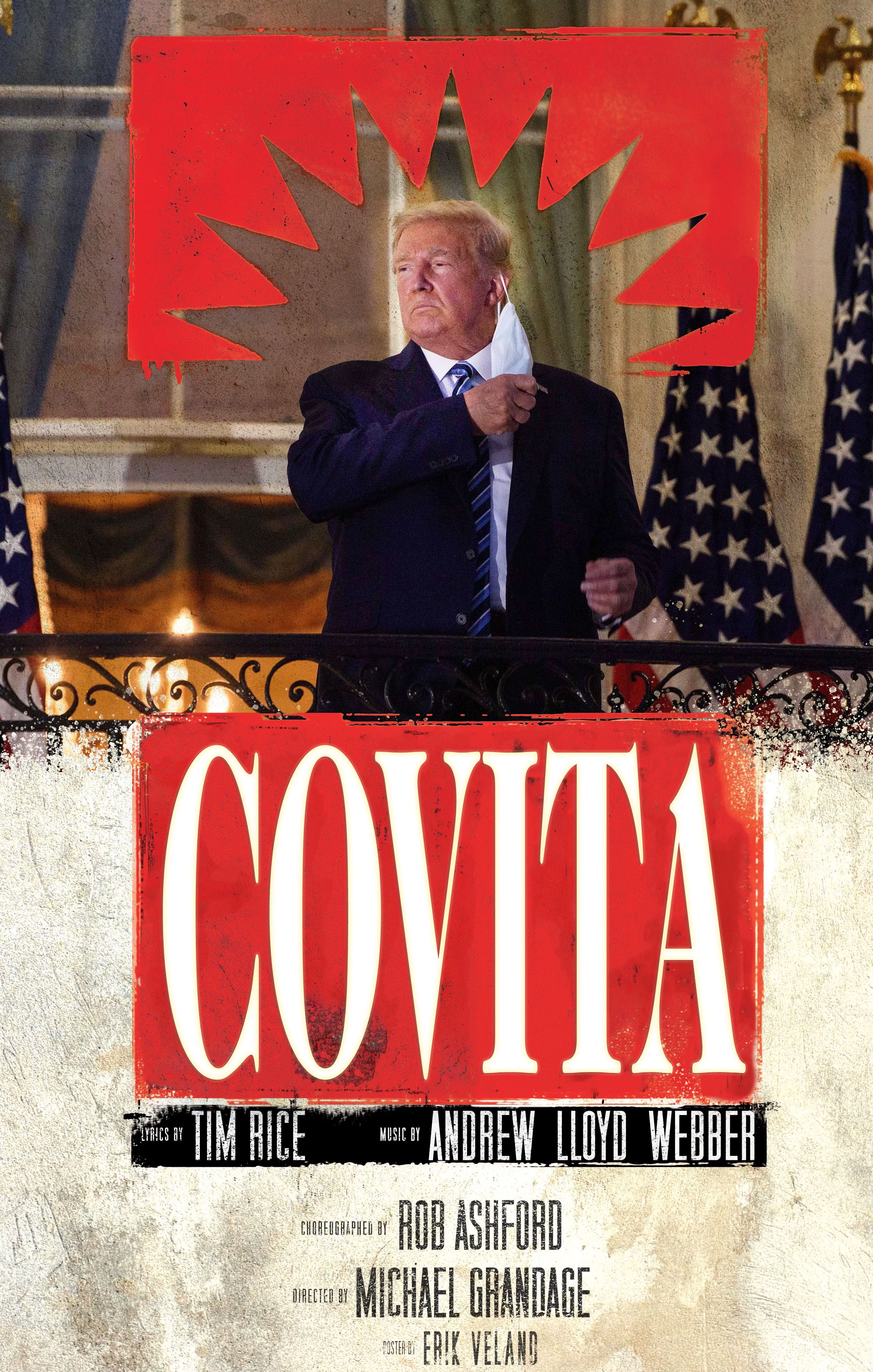
Fast forward to 2020, and Trump – now president – orchestrated another piece of political theater involving life and death. In October of that year, sick with COVID-19, Trump famously insisted on a risky motorcade “drive-by” outside Walter Reed hospital so he could wave to supporters, and later staged a maskless balcony scene at the White House for live TV. As historian Ruth Ben-Ghiat observed, Trump framed his COVID battle as proof of his personal invincibility – a “heroic individual” who “had to do that” to show strength, comparing himself implicitly to strongmen of the past. The sight of Trump ripping off his mask on the balcony, clearly still gasping for breath, was described as “a manic act of narcissistic theatre” by critics at the time. It was political stagecraft: the president as a conquering survivor of illness, bolstering his “tough guy” brand at the expense of public health norms.
This pattern – of manufacturing moments of peril or triumph – is a through-line in Trump’s approach. It reflects what The Atlantic has called Trump’s “reality TV presidency,” wherein dramatic visuals and narratives matter more than consistent truth . Trump himself has often hinted at the performative aspect of his role. “This is going to be great television,” he once remarked with satisfaction during a particularly tense 2019 meeting, essentially acknowledging the spectacle he was creating . He understands intuitively what engages his base: conflict, jeopardy, and victory.
Seen in this light, the Butler assassination attempt fits Trump’s oeuvre disturbingly well. It was ultimate must-see TV for his followers. A political scientist at Boston University noted that the bloodied-ear photo instantly became “a symbol of solidarity for many of his supporters” – a shared experience of persecution and survival . The incident allowed Trump to assume the role of righteous victim-turned-avenger: he was literally bloodied but unbowed. “His frequent retellings of what happened in Butler serve to deepen his bond with supporters by fostering a collective experience of overcoming adversity,” the Washington Post observed . In Trump’s rallies after July 13, he spoke of the attempt almost mythologically – at one point even saying, “Who knows – maybe [my opponents] even tried to kill me.” By planting that seed (however baseless) that “they” were out to assassinate him, Trump melded the event into his narrative of a grand conspiracy against MAGA – the same narrative fueling claims of election fraud and “witch hunts” against him .
But notably, once Trump had wrung every ounce of political capital from the assassination scare – once the election was over – he went almost silent about it. In the final weeks of the 2024 campaign, Trump and running mate J.D. Vance hammered the incident repeatedly, even suggesting it was an “inside job” by Biden’s government. The image of Trump with blood on his face appeared on countless campaign materials. Yet after Election Day (which Trump ultimately lost, amidst more controversies), the topic virtually disappeared from Trump’s rhetoric. In interviews and rallies in 2025, Trump has scarcely mentioned how close he came to death that day. There were no demands for a continued investigation or a national commission on political violence – causes one might expect a genuine victim of an assassination attempt to champion passionately. Instead, Trump quickly pivoted back to his familiar grievances (election recounts, legal troubles), almost as if the Butler drama had never happened.
This near-total post-campaign silence is perhaps one of the most jarring anomalies of all. If July 13 was truly “the hour I almost died,” wouldn’t any normal person – let alone a famed storyteller like Trump – reference it frequently thereafter? Would it not become a core part of their public identity? Trump’s relative quiet about the attempt, after its initial utility passed, suggests it was a self-contained media moment. It served its purpose in the campaign and was then allowed to fade from memory. Such transience is characteristic of staged PR events, not authentic traumas. Real wounds leave lingering pain – but performative wounds are only flashed when useful.
Anatomy of an Undetected Threat
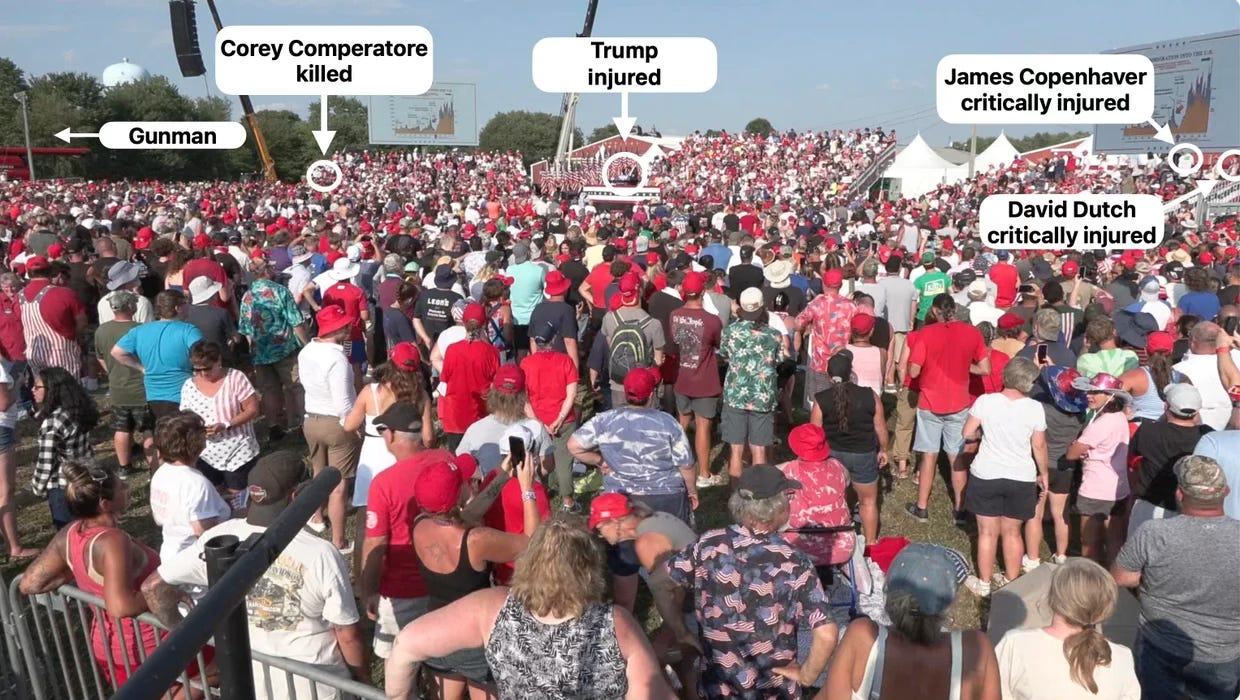
In the aftermath, investigators and forensic specialists pieced together a timeline of how Crooks orchestrated the attempt. Security footage and witness reports showed the young man milling around outside the rally earlier that afternoon, carrying a golf rangefinder device – an innocuous item that in hindsight was a tool to gauge the distance to the target stage. Local officers had noticed Crooks’ odd behaviour “looking for someone” but failed to detain him before he slipped out of sight. Sometime after 6 p.m., he hoisted himself onto the roof of a low-slung warehouse just beyond the fairground fence. From that vantage point, he had a direct line of sight to Trump on stage, unobstructed by the throngs of supporters between. Secret Service counter-sniper teams were stationed around the venue, but analysts later concluded that glare, angle, and possibly a communications breakdown meant “they may not have been able to see the shooter at first”. By the time a bystander shouted a warning about a man on the roof, it was too late – Crooks opened fire almost immediately.
Forensics experts would marvel at both the precision and the luck involved in the shooting. Firing eight shots in quick succession, Crooks managed to strike four human targets (Trump and three audience members) in a dense crowd of thousands – a grim testament to how exposed public figures and bystanders are in open-air venues. But it was also a stroke of luck (or fate) that Trump was not more grievously injured. The bullet that hit him did so (supposedly) at a shallow angle, grazing the helix of his right ear rather than entering his skull or neck. Photographs taken seconds afterward showed a bloody scrape along the ear’s outer edge and blood on Trump’s cheek and collar, but no serious tissue damage. “As tough as he looked in that one picture with his fist… the next frame I took, he looked completely drained,” recalled Doug Mills, a veteran New York Times photographer at the scene. Indeed, Trump was extraordinarily fortunate: a few inches difference and the shot could have been fatal.
Within 48 hours, the FBI announced it was treating the shooting as “an assassination attempt and potential domestic terrorism”, while stating that evidence so far indicated Crooks had acted alone. Agents executed search warrants at Crooks’s home in a Pittsburgh suburb, seizing his electronic devices and the legally purchased AR-15 rifle (which belonged to his father). No manifestos or clear ideological screeds were immediately found – “the shooter’s phone had not yielded meaningful clues related to motive,” one official disclosed. Crooks had no criminal record, and former classmates described him as an isolated, awkward figure, “odd” but not overtly threatening. A 1997 Secret Service study of would-be assassins observed that two-thirds were “social isolates” with few clear warning signs, and Crooks seemed to fit that pattern. He was a college honours student with an interest in engineering, and aside from a failed tryout for his high school rifle team (ironically due to poor aim), he gave little indication he might turn violent.
If anything, the enigma of Crooks’s motive only deepened the shock. Here was a 20-year-old registered Republican with no obvious political or personal grievance against Trump, who had opened fire on a political rally. He did not live to explain his actions. His death at the scene meant the usual legal process of motive-finding – interrogations, trial, testimony – would never occur. This left a gaping hole in the narrative: Why did he do it? Speculation ranged from mental health issues to the toxic brew of online extremism. Investigators did note one suggestive detail: on Jan. 20, 2021 – the day of Joe Biden’s inauguration – Crooks donated $15 to a progressive political PAC, an oddly incongruent act for a registered Republican. Was that a hint of hidden political leanings, or just a red herring? With no manifesto or claim of responsibility discovered, the “why” remains murky. The lack of an obvious motive allowed everyone to project their own fears onto the event – and perhaps made it easier for institutions to quietly close the book on it.
In the immediate aftermath, however, there was at least one clear consensus: serious security lapses had occurred. Secret Service Director Kimberly Cheatle ordered an internal review, which reportedly found a “litany of security failures” in Butler – from inadequate site planning to communication breakdowns among agencies. The rooftop from which Crooks fired had not been secured or monitored, an oversight now glaring in retrospect. Attendees later recalled that entry checkpoints were lax, with some folks carrying large bags into the rally unchecked. Helen Comperatore, Corey’s widow, spoke for many when she said, “I’m angry because there were a lot of mistakes made that day, and it didn’t have to happen”. For a former President under Secret Service protection to come within inches of assassination in broad daylight, something clearly went awry. And yet, aside from terse press releases and closed-door reviews, there was no public 9/11 Commission-style inquiry, no far-reaching congressional investigation into the security failure. The story was swiftly subsumed by other headlines. Within weeks, it seemed, the nation had collectively exhaled in relief and then moved on.
From JFK to Trump: Assassinations, Aftermaths, and Echoes of History
The apparent epilogue to the Trump shooting — a quick resolution with a lone gunman dead and the principal safe — stands in stark contrast to the sprawling aftermath that followed some earlier high-profile assassination attacks. Nearly 60 years ago, when President John F. Kennedy was murdered by a sniper in Dallas, the forensic and civic response was vast and unending. In 1963, Americans reeled in shock and demanded answers: How many shooters? Who was behind it? The JFK assassination launched a massive federal investigation (the Warren Commission) and later a congressional inquiry, generating thousands of pages of testimony, exhibits, and analysis of bullet trajectories and autopsy photos. Every frame of the Zapruder film and every fragment of ballistics evidence were scrutinized. Yet even today, most Americans remain unconvinced that we know the full truth. A recent Gallup poll shows 65% of Americans believe Kennedy’s assassination involved a conspiracy of multiple actors, while only 29% accept that Lee Harvey Oswald acted entirely alone. Decades of inconsistent forensic narratives – the infamous “single-bullet theory,” disputed autopsy reports, and mishandling of evidence – bred a deep public cynicism that has never fully abated. The JFK case, mired in controversy, refused to fade from the national psyche; if anything, it spawned a cottage industry of citizen investigators and conspiracy theorists determined to unearth a hidden truth.
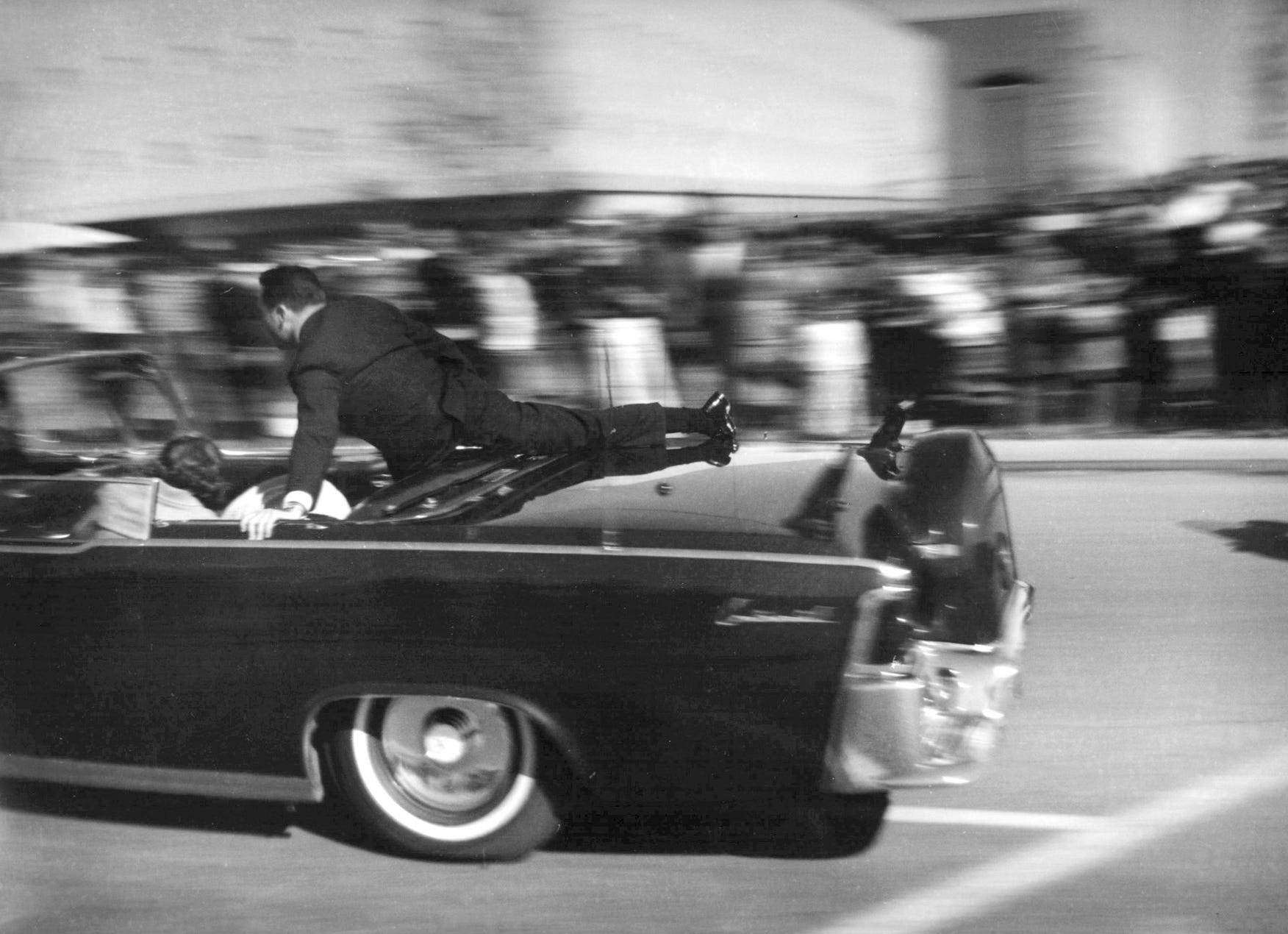
By comparison, the 2024 attempt on Trump’s life has almost vanished from public discourse. In part, this is because the outcomes differed: Kennedy was killed, Trump survived. The Kennedy assassination abruptly changed the course of history, whereas Trump’s campaign was able to continue (indeed, he even went on to clinch the Republican nomination weeks later). History typically devotes more attention to tragedies than to near-misses. But the disparity in public scrutiny runs deeper than life and death. For JFK, every forensic detail – bullet calibers, wound paths, the timing of shots – became subject to relentless examination and debate. For Trump, the forensic story was tidily (and perhaps too conveniently) wrapped up within days: one shooter, no co-conspirators, case closed. No grassy knoll, no second gunman, no mystery bullet to agonize over. And where JFK’s autopsy itself became a point of contention (with critics arguing it was rushed and incomplete, fueling later conspiracy claims), there has been little to no public discussion of the autopsy of Corey Comperatore or of Crooks. These were handled routinely by local authorities; the findings confirmed exactly what everyone presumed – that Comperatore died from a rifle gunshot and Crooks from a sniper’s bullet. In forensic terms, nothing about the Butler incident invited lingering doubt.
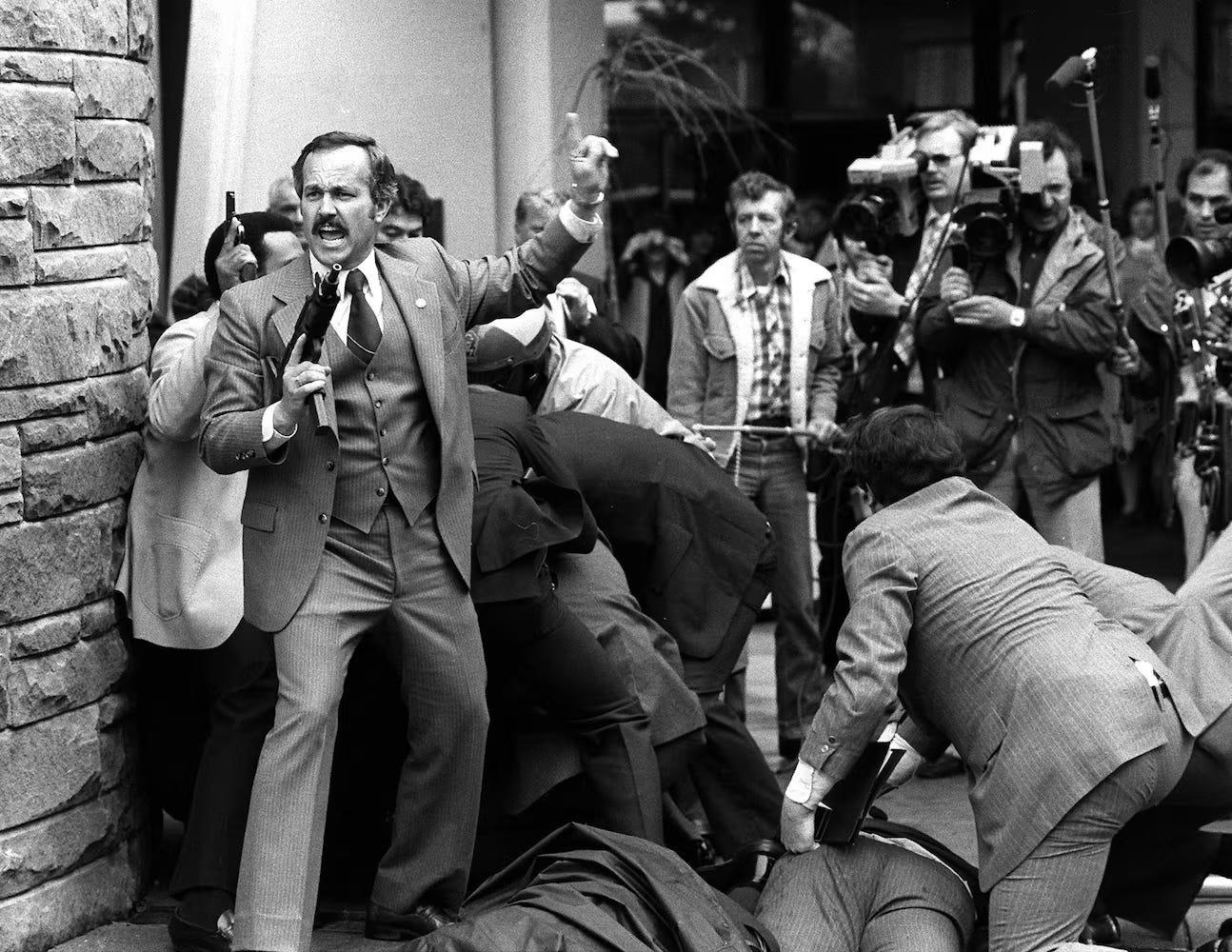
Historical parallels do exist, of course. The attempt on Trump immediately drew comparisons to Reagan’s near-assassination in 1981 – another case of a would-be killer acting alone for opaque reasons. When John Hinckley Jr. shot President Ronald Reagan outside a D.C. hotel, wounding him and three others, it dominated news coverage for weeks. The nation pored over surveillance footage frame-by-frame, marveled at Reagan’s fortitude in the hospital, and later grappled with Hinckley’s psychological obsessions (he wanted to impress actress Jodie Foster). The Reagan shooting spurred tangible changes: it led to the Brady Handgun Violence Prevention Act, named for press secretary James Brady who was critically injured, and prompted security upgrades like the use of limousines with rooftop armor and more detailed screening of crowds. Similarly, Robert F. Kennedy’s assassination in 1968 prompted the Secret Service to begin protecting presidential candidates (not just sitting presidents) – a protection Trump benefited from as a candidate in 2024. In other words, past assassination episodes usually led to a cathartic process of reform or at least a prolonged societal reckoning.
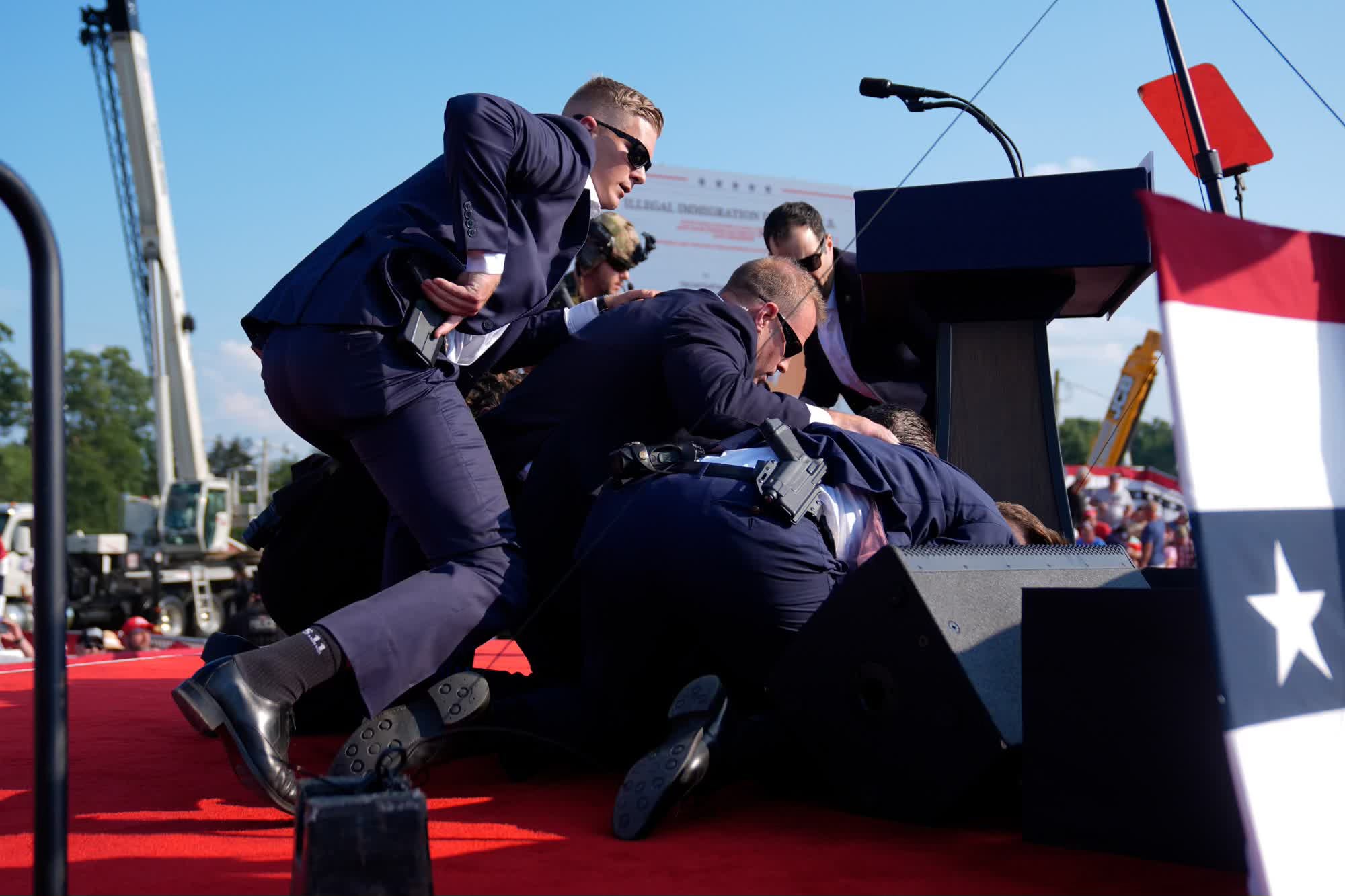
Why, then, has the Trump near-assassination seemingly left so faint a trace on America’s memory and institutions? This dissonance is even more striking considering Trump’s status: a former U.S. president and the then-front-runner for a major party nomination. Attempted assassinations of candidates are exceedingly rare in modern U.S. history; the last comparable incident was the 1972 shooting of Alabama Governor George Wallace, who was running for president and left paralyzed by an attacker’s bullet. That attempt had huge political ripple effects at the time. Yet Trump’s brush with death in 2024, despite being “shocking” in the moment, did not become a defining story of the year in the way one might expect. Instead of a 9/11 Commission or Warren Commission, we got a brief FBI press conference and an outpouring of “thoughts and prayers.” Instead of a national dialogue on political violence, the narrative quickly fragmented and then dissipated.
Part of the explanation may lie in who Trump is and the era we live in. In 1963 or 1981, an attack on the nation’s leader (or aspiring leader) tended to unite the country in concern; media coverage was suffused with a sense of gravitas and collective alarm. In 2024, America’s extreme partisan polarization complicated the public reaction. While leaders of both parties dutifully condemned the violence – President Biden urged Americans to “lower the temperature” of political rhetoric in an Oval Office address – the undercurrents were more cynical. Many of Trump’s detractors found it hard to see him as an innocent victim, given his own habit of inflammatory speech. Some commentators openly wondered if Trump’s rhetoric had, indirectly, sowed the seeds of violence that came back to target him. In fact, an ABC/Ipsos poll taken just after the incident found that 46% of Americans believed Trump himself bore blame for the current climate of political violence, far more than those who blamed Biden (27%). In other words, nearly half the public thought the assassination attempt was an outgrowth of the chaos Trump himself helped create – a nuance that doesn’t lend itself to simple narratives of martyrdom or national trauma.
Trump’s passionate supporters, on the other hand, saw the attempt as validation of their darkest suspicions. Within hours, conspiracy theories began flooding far-right corners of the internet, positing that the incident was staged or that a “deep state” plot had tried to take Trump out. PolitiFact swiftly rated the “staged attack” theory as “Pants on Fire” false, noting that thousands of witnesses and multiple videos confirmed the reality of the shooting. But the mere emergence of such theories hinted at how partisan distrust could warp the event’s reception. Rather than a unifying “where were you when” moment, the attempt risked becoming just another polarizing Rorschach test. Trump himself fed this atmosphere in subsequent months. In October 2024, returning to Butler for a rally on the very same fairgrounds, he staged what one journalist called a “sentimental spectacle… intended to mythologize the 13 July shooting for the Trump base”. With the family of Corey Comperatore onstage as honored guests, Trump pointed to the very roof where Crooks had hidden and floated the suggestion that “maybe [my] political opponents even tried to kill me”. It was a baseless insinuation – no evidence has ever linked Crooks to any campaign or party – but it drew roars from the crowd. The near-assassination was being woven into Trump’s narrative of persecution, not as a sobering civic lesson, but as a campaign rally talking point.
The Story That Disappeared: Media Silence and Narrative Control
In the immediate wake of the attempt, the news media blanketed the story with breaking reports, live video, and banner headlines. For a brief weekend, it was the story in America. Yet the shelf-life of that saturation coverage was surprisingly short. By some accounts, the Trump assassination attempt “dominated the news and the mood” for about one day – until other political dramas began to intrude. Within a week, headlines shifted to the Republican National Convention and Trump’s VP selection; soon after, coverage pivoted to President Biden’s campaign decisions and other electoral horse races. The attenuated attention span was not lost on media observers. The Poynter Institute noted that many readers who opened their Sunday papers on July 14, 2024, looking for in-depth rundowns of the Trump rally shooting, came away puzzled by the relatively sparse treatment. A major attempt on a presidential candidate’s life had occurred, yet some front pages relegated it to below-the-fold status or a single follow-up article. Media fatigue and triage seemed to be at work. As one editor defensively explained, 2024 was already “an avalanche of news” – wildfires, Supreme Court decisions, multiple Trump indictments – and the near-assassination, while dramatic, “didn’t have new developments by day three.” In the ruthless calculus of the 24-hour news cycle, stasis means staleness. Once Crooks was confirmed dead and Trump bandaged his ear, there was a sense that the narrative had hit a dead end. No high-speed chase, no manhunt, no trial – just a burst of violence and then paperwork.
More cynically, “institutional alignment” and narrative control may have played a role in the story’s quick fade. It did not escape notice that many mainstream media outlets – often criticized by the right as antagonistic to Trump – covered the event matter-of-factly, even cautiously. There was no over-the-top melodrama or investigative crusading in the weeks after; if anything, coverage grew perfunctory. “Some critics seemed to be accusing journalists of being both overly reckless and, at least in their coverage of the shooting’s immediate aftermath, overly cautious,” media analyst Jon Allsop observed. In a Columbia Journalism Review column, Allsop pointed out the irony: right-wing pundits blamed the media’s “reckless” anti-Trump tone for inciting the shooter, even as those same voices lambasted the press for downplaying the attempt once it happened. This damned-if-you-do, damned-if-you-don’t predicament might have discouraged outlets from dwelling too long on the story. Any extensive analysis could be twisted into evidence of bias – either painting Trump as a victim-hero (inviting charges of sensationalism) or minimizing the danger (inviting charges of callousness).
The result was a kind of muted, minimalist approach. Initial reports delivered the basic facts and striking images. But thereafter, coverage largely “sidelined” the event in favor of other narratives. Unlike past eras when three TV networks and a handful of national papers set the agenda, today’s fragmented media ecosystem meant that there was no single drumbeat sustaining public focus. Once the story cooled, attention scattered. Some of the most probing forensic reporting came not via primetime broadcasts but through niche formats: The Washington Post’s visual forensics team built a detailed 3D model of the shooting scene and published a granular analysis two weeks later, confirming the sequence of gunfire and the heroic intervention of the local officer. It was compelling investigative work, but it ran in the Investigations section, not atop the front page. By then, many casual news consumers had mentally archived the whole incident as “resolved.”
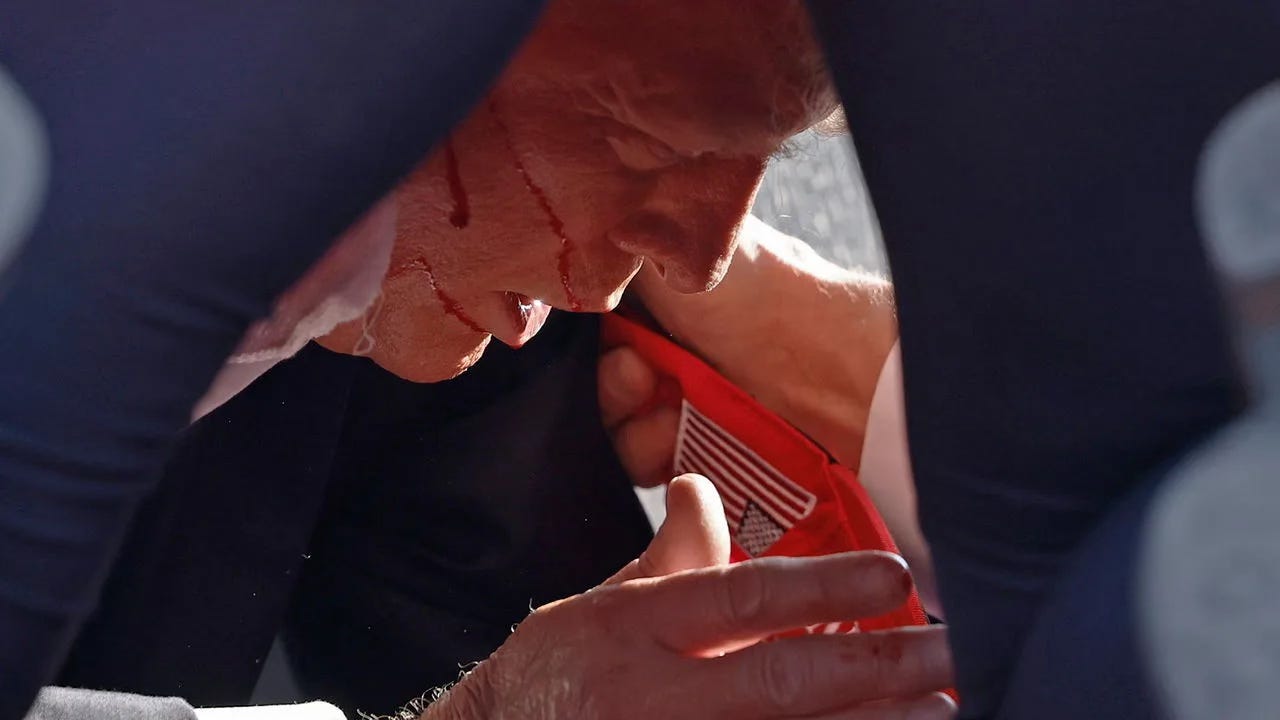
Even the photojournalists who captured Trump’s bloodied fist found that their images’ impact dissipated in the cacophony of the news cycle. The dramatic AP and Getty photographs from Butler went viral on social media for a day, then were overtaken by the next outrage or spectacle. Journalists at the rally literally risked their lives to document the attempt, diving for cover even as they kept cameras rolling. Yet any sense of shared national experience from that documentation was fleeting. As Allsop noted, in one moment the press is a convenient punching bag, “only to be drowned out the next” in our attention economy. Indeed, one might argue the media itself was fatigued by 2024’s relentless torrent of crises. A former news magazine editor, reflecting on coverage of the attempt, compared it to the frenzied 1968 campaign – except now “dueling realities” and fragmented channels make any single narrative hard to hold onto. The assassination attempt quickly became just another contested story rather than an unambiguous national alarm bell.
It is telling that when Harvard’s Shorenstein Center convened experts later that year to evaluate campaign coverage, a question was posed: “Is there a risk of overplaying the threat of political violence? Or understating it?”. The answer, from veteran scholar Thomas Patterson, was that assassinations and near-misses are so rare and sui generis that they defy simple pattern – the only real danger in heavy coverage would be inspiring copycats, a risk history shows is minimal. In other words, Patterson subtly encouraged continued attention to the issue, not a quiet burying of it. Yet by then the media had largely moved on, arguably underplaying the lasting implications of the attack. There was scant follow-up on security reforms or the broader trend of rising threats to political figures. One exception was the local Pittsburgh press and NPR affiliate reports, which kept tabs on Corey Comperatore’s family and the community’s grief. For the most part, though, once Trump himself stopped talking about the shooting, the media did too. And Trump, after milking the moment for a convention speech line or two, seemed more eager to shift focus back to his legal battles and campaign grievances. It was an astonishingly quick reversion to the mean: attempted assassination one week, back to politics-as-usual the next.
Democracy’s Memory Hole: Public Amnesia and the Erosion of Accountability
Perhaps the most disquieting aspect of the 2024 Trump assassination attempt is not what happened during those 16 seconds of gunfire, but what didn’t happen afterward. In a healthy democracy, a politically motivated act of violence – especially one targeting a would-be head of state – should prompt searching self-examination. At minimum, it should spark a robust public conversation about political violence, extremism, and the safeguards of our democratic process. Yet in this case, any such conversation was short-lived and shallow. There was no blue-ribbon commission convened to analyze the societal factors that produced a Thomas Crooks. No nationally televised town hall about the escalating normalization of hate and violence in American politics. Instead, there was a collective sigh of relief that “it could have been worse,” followed by a collective shrug. The episode has been largely relegated to a footnote of the 2024 campaign, an event recalled mainly by Trump partisans and trivia buffs rather than treated as a warning sign for the republic.
This public amnesia is troubling. It suggests a level of desensitization that has set in after years of partisan turbulence. “For some Americans, the desensitization now extends to political violence,” observed one group of experts in the aftermath. Indeed, the attempt on Trump’s life, while startling, came after a string of other political violence incidents: the 2017 shooting of congressmen at a baseball practice, threats against Supreme Court justices, an armed man’s attack on an FBI building, even the January 6, 2021 Capitol riot. Each incident caused a temporary uproar, but then faded without resolving the deeper issues. Americans have begun to absorb the unthinkable as a new baseline. When surveyed after the Trump incident, 87% of U.S. adults voiced worry about political violence in the country, and more than 60% expected it to increase in coming years. That broad concern, however, has not translated into urgency or consensus on solutions. If anything, it has fed a quiet cynicism: a sense that “this is just how it is now,” and that no one – not the media, not Congress, not law enforcement – will meaningfully intervene until it’s too late.
The muted aftermath of the Trump attempt also underscores what might be called a rupture in democratic narrative accountability. In previous eras, when democracy was tested by violence, the moment was seized to reaffirm shared values and bolster institutional trust. After President Reagan was shot in 1981, his gallows-humor quips (“Honey, I forgot to duck”) and bipartisan well-wishes helped renew a sense of common humanity across party lines. By contrast, Trump’s near-miss seemed to reinforce cynicism rather than alleviate it. Many of his opponents privately (or not so privately) greeted the news with grim humor or outright skepticism. Many of his supporters immediately folded it into their grievance narrative. Lost was the middle ground of civic-minded outrage – the notion that every American, regardless of politics, has a stake in condemning and understanding an attempt to murder a candidate. As political violence expert Rachel Kleinfeld noted, “Once political violence is normalized, it spreads across the spectrum”, and it becomes harder and harder for the moderate majority to make their voices heard over the extremes. Kleinfeld was not surprised an assassination attempt happened in 2024 given the “tenfold rise” in threats to public officials and the mainstreaming of violent rhetoric. But she also warned that without concerted action – leaders tempering their language, citizens standing up to say enough – America could slide further down a dangerous path.
That concerted action has been sorely lacking. Instead, the aftermath of the Trump shooting was characterized by institutional inertia and public passivity. Consider the Secret Service: its internal review identified clear failures, but there has been little public pressure on the agency to explain or reform them. An AP-NORC poll a few weeks later found only 16% of Americans were highly confident in the Secret Service’s ability to protect major political figures. Yet that crisis of confidence prompted no hearings on Capitol Hill, no shake-up in leadership. Similarly, while local law enforcement in Pennsylvania received praise for their role in stopping Crooks, there was scant examination of intelligence lapses – for example, why the numerous digital warning signs of rising violent extremism weren’t better monitored. The FBI did classify the case as domestic terrorism, but by labeling Crooks a lone wolf with no known motive, the systemic dimension was effectively waved away. One can’t help but recall how, after JFK’s assassination, even in an age without social media or modern data analytics, authorities scoured Oswald’s life and associations to detect any hint of a broader plot. In Trump’s case, public understanding of Crooks remains superficial: a troubled kid with a gun, full stop. The opportunity to delve into how political demonization, online radicalization, or societal neglect might incubate such violence was largely missed.
Also missed was a chance to fortify democratic norms in response. A near-assassination could have been a moment where leaders across the spectrum jointly reaffirmed that we settle our differences with ballots, not bullets, and enacted measures to protect that principle. Instead, any unity quickly gave way to the usual bickering. Within days, surrogates of each party were using the incident to score points – one side blaming leftist hate or gun culture, the other pointing to Trump’s own incendiary talk or mocking the media’s sudden sympathy. If democratic narrative accountability means maintaining a shared story about what is beyond the pale in our politics, then this event revealed a fractured narrative landscape. There was no single story about what the Butler attack meant. Was it a sign of rising left-wing militancy? Right-wing self-destruction? Government failure? Media incitement? Depending on one’s bubble, it was framed as any of these or none. The inability of the nation to converge on a common interpretation of such a blatant assault on democracy is, in itself, a red flag.
In the end, the supposed 2024 attempt on Donald Trump’s life came and went like a summer storm – intense, frightening, but passing swiftly, leaving surprisingly few permanent marks on the terrain. Trump, for his part, was back on the campaign trail within days, milking the moment for bravado but not dwelling on its implications. His brief uptick in popularity – polls showed his favorability nudged up to 40%, a four-year high, after the incident – suggested a rally-round-the-flag effect that could have opened the door to a broader conversation about unity. But rather than moderate his tone or lead a crusade against political violence, Trump reverted to combative form, even lengthening his rally speeches with attacks on opponents days later. Any goodwill evaporated as quickly as it came. And when he finally did revisit the shooting months later, it was to cast himself theatrically as the target of a grand conspiracy, not to call for reconciliation.
For observers of American democracy, this entire saga raises uncomfortable questions. What does it say about the state of the republic when an assassination attempt elicits more cynicism than soul-searching? When even the near-loss of a former president cannot jolt the system into reflection and reform? It suggests a polity running on fumes – polarized, jaded, and dangerously numb. In a poignant piece of commentary, political scientist Javed Ali noted that a single failed assassination doesn’t necessarily herald a new wave of violence; it might remain an isolated incident. But, he cautioned, failing to address the underlying climate virtually guarantees continued risks. America in 2024, he implied, was at an inflection point: either treat this near-miss as a wake-up call or guarantee that eventually one of these attempts will succeed, plunging the nation into an even deeper crisis.
I would argue that we, as a democratic society, failed a test in July 2024. Not the test of stopping the bullet (that, thanks to brave agents, was passed), but the test of what we did with the aftermath. We failed to demand answers with a unified voice, failed to sustain our attention on the uncomfortable truths it exposed, and failed to reinforce the norms that should bind us together when violence strikes at the core of our political system. Instead, the alleged attempt on Donald Trump’s life became a transient talking point, instrumentalised and then discarded. In the process, an opportunity to reaffirm the sanctity of our democratic process – to insist that elections must never be decided by bullets – was lost in the din.
The fading of this assassination attempt from our collective narrative is more than a media story; it is a democratic failure. It reflects the extent to which America’s capacity for common focus and moral consensus has been eroded. It is a warning that even the most brazen attacks on democracy can slip down the memory hole if they do not fit the tidy scripts of our polarised tribes. And it challenges journalists, citizens, and leaders alike to consider how to restore that narrative accountability before the next, perhaps worse, crisis arrives. The blood on Donald Trump’s collar dried and vanished, but the underlying wounds to the body politic remain – untended and largely forgotten. Someday, if another shot finds its mark, we may look back at July 13, 2024, and wonder why its lessons were not truly learned. In a democracy worth keeping, near-misses should not be so easily missed.
The Uncomfortable Truth and the Need for Scrutiny
To be clear, no conclusive proof has emerged that the assassination attempt on Donald Trump was staged by any party. What we have assembled here is a constellation of anomalies, coincidences, and context that, taken together, cast a long shadow of doubt. The physical evidence – a miraculous minor injury from a major weapon – is intriguing but not impossible. The orchestrated narrative of heroes and martyrs could be pure happenstance, however melodramatic. The security lapses might be plain incompetence rather than complicity. And Trump’s exploitation of the event’s imagery might simply reflect a cynical opportunist capitalizing on fate.
Yet it would be equally naive to dismiss the pattern that emerges. Trump has both motive and modus operandi to manufacture political spectacles. He thrives on being the protagonist of every story – hero or victim or, often, both at once. As historian Ben-Ghiat notes, authoritarian-leaning leaders frequently “cultivate an appearance of omnipotence,”presenting themselves as miraculously protected figures who survive plots and attacks . Adolf Hitler, for example, survived multiple assassination attempts and used each as propaganda to claim destiny’s favour – “providence” sparing his life for a purpose. In 2018, Brazil’s far-right candidate Jair Bolsonaro was stabbed at a campaign rally; he parlayed his dramatic survival into a wave of sympathy that helped sweep him into office . (Bolsonaro’s recovery video from his hospital bed – pale, in monitors, yet resolute – only bolstered his “authentic” strongman image . He won the election weeks later.) These examples show how genuine attempts can be politically weaponized – but they also open the door to suspicions that leaders, knowing the benefits, might not leave such incidents entirely to chance.
In Trump’s case, whether he orchestrated the Butler shooting or simply exploited it, the end result converges: a narrative of righteous vengeance and unity that benefited him politically. We, as citizens, are left with an unsettling scenario. If the attempt was real, then our political climate is far more poisoned by violence than many realized – and Trump’s subsequent spinning of the event for gain is its own kind of cynical manipulation. If the attempt was partially or wholly staged, then we have witnessed something even more disturbing: the deliberate fabrication of terror, with real American lives at stake, to serve a political theater. That would be a betrayal of public trust at the most fundamental level – turning supporters into unwitting props and victims in a campaign drama.
Getting to the truth is imperative. Unfortunately, transparency has been scarce. Federal agencies have been tight-lipped; as Senator Ron Johnson complained, “the lack of transparency… is unacceptable. Without transparency, the truth behind the assassination attempt will never be fully revealed and understood.” Indeed, more than a year later, the FBI has not released a comprehensive report to the public. Key questions about the shooter’s motive, planning, and possible contacts remain only partly answered. Trump’s campaign and family, for their part, have shown no interest in a deeper public accounting – they got what they needed and moved on.
That leaves the task to journalists, independent investigators, and an alert public. We must demand evidence: ballistic analyses, communications logs, surveillance footage – all the raw data that can either corroborate or challenge the official story. We should listen to forensic experts and trauma surgeons with no political axe to grind, and heed media scholarswho recognize stagecraft in modern politics. Crucially, we must maintain the courage to ask hard questions, even at risk of confronting an awful answer. It is not “crazy” to probe coincidences and convenient narratives; it is responsible citizenship.
If the true choreography behind the Butler shooting was more orchestrated than authorities let on, it would have required neither an army of operatives nor an elaborate network of “deep state” actors—just a handful of loyalists in the right rooms at the right time. The chain of command for burying uncomfortable details in American politics is always shorter than we care to imagine. Picture the core: a tight group of Trump campaign loyalists, a select few within Secret Service leadership, perhaps a couple of trusted White House or campaign doctors, and veteran comms hands who know how to throttle information. With twelve or so people in the know—each insulated by NDAs, party loyalty, or the pragmatic calculus of career survival—you could corral the narrative, steer the flow of medical information, control access to physical evidence, and keep the details blurry enough for plausible deniability. No need for cloak-and-dagger subterfuge; all it takes is silence at key moments, a mislaid report, a press liaison who “can’t comment on an ongoing investigation.” The very machinery that powers everyday political scandal management can be weaponised to choke off scrutiny when it matters most.
Beyond that inner sanctum, it’s not even about a conspiracy—just institutional muscle memory and the fatal comfort of routine. Local law enforcement falls in line with federal instructions. Hospital administrators stonewall requests for records, citing privacy or “ongoing investigations.” Reporters, battered by years of scandal fatigue and overwhelmed by the ceaseless churn of American chaos, move on as soon as the story’s heat dies down. What remains is a culture where nobody with actual power is incentivised to dig deeper, and anyone who tries is quickly boxed out or dismissed as chasing shadows. The cover-up, if there is one, succeeds not through genius but through indifference: a tacit agreement among professionals to let the mystery fade away. In the end, the best way to bury an inconvenient truth in 21st-century America isn’t to erase it—it’s to ensure the right people never bother to look for it in the first place.
Democracy depends on truth – especially the truths that power would prefer remain hidden. If an assassination attempt can be weaponized as propaganda, or worse, simulated for effect, without rigorous examination, then our democracy’s immune system against lies and violence grows fatally weak. In the end, whether July 13, 2024, was a genuine attack manipulated for political theater or a political theater that risked seeming like a genuine attack, the lesson is the same: We must be vigilant. We must recognise when we are being emotionally choreographed by those who seek to convert our fear and hope into their power.
Donald Trump, a WWE veteran, stood up – in defiance of every Secret Service protocol – on that Butler stage, blood on his collar, and declared, “Fight!”. The crowd roared its approval. It was a scene of courage – or so it appeared. The true fight, however, may be ours now: to fight for the truth of what really happened that day. In doing so, we affirm that no leader can be allowed to stage-manage democracy, not with words and certainly not with bullets.
In a free republic, even a would-be assassination – perhaps especially an assassination – must be met not just with relief or rage, but with relentless inquiry. Anything less, and we risk applauding on cue at whatever story is served to us, never grasping how easily our deepest emotions can be engineered in the dark
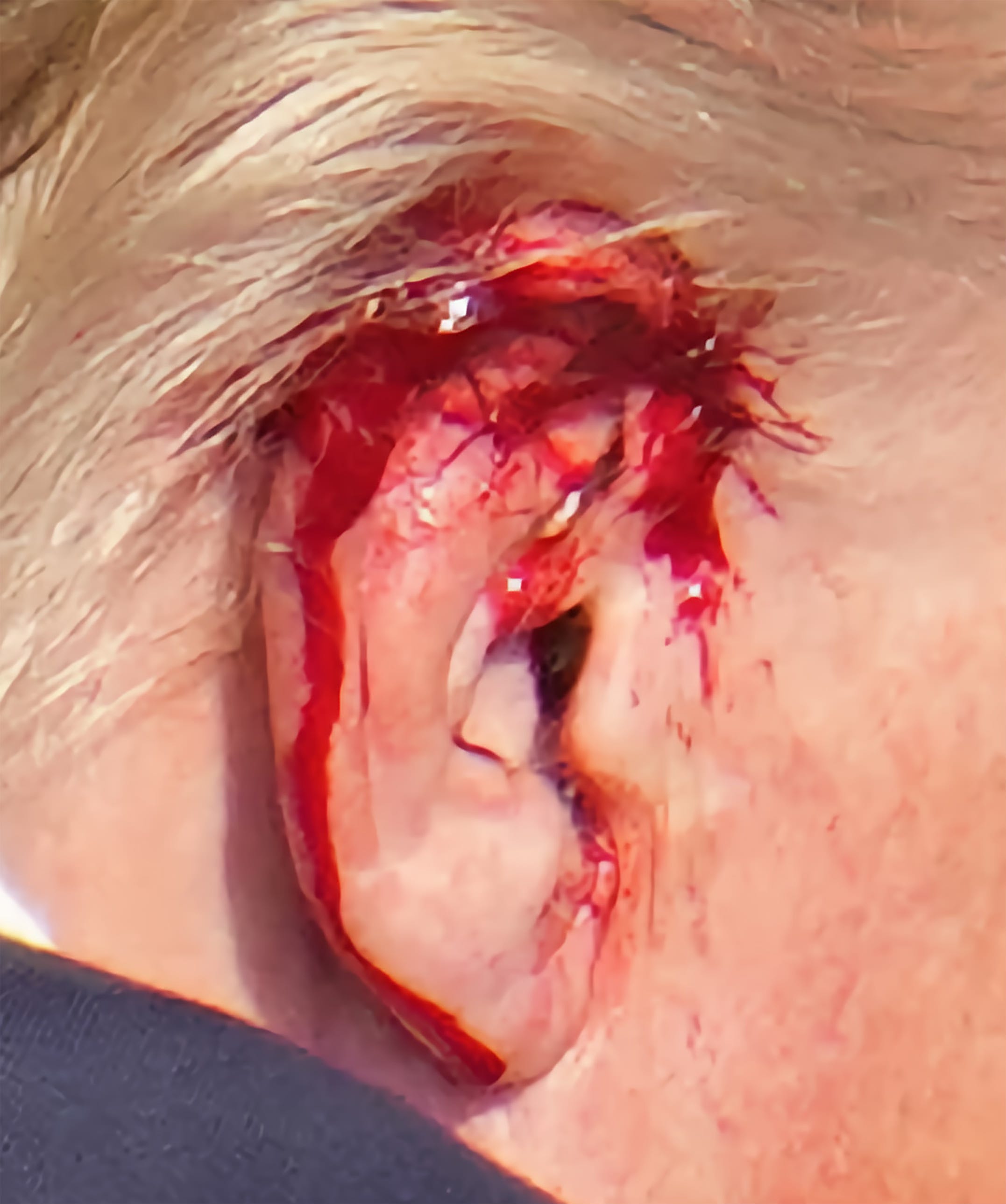
SIDEBAR: Ballistics Analysis
1. Ballistics: Shockwave, Cavitation, and Tissue Destruction
High-Velocity Wounds: 5.56mm rounds exit the muzzle at ~900 metres/second. At this velocity, the round creates a sonic shockwave and temporary cavitation—even a “near miss” will rupture tissue, shatter cartilage, and sometimes even fracture bone, due to the rapid displacement of surrounding air and fluid.
Medical Reality: Forensic texts and trauma case studies (see DiMaio, Gunshot Wounds: Practical Aspects of Firearms, Ballistics, and Forensic Techniques) show that even a “graze” will almost always tear open soft tissue, leave substantial swelling, and frequently cause both hearing loss and concussive trauma to adjacent structures.
2. Ear Anatomy and Ballistics
Cartilage & Bone: The pinna (outer ear) is cartilage, but behind it is the temporal bone (side of the skull). A 5.56mm round “clipping” the ear would almost certainly shatter the cartilage, risk fracturing the skull base, and potentially cause internal bleeding or cerebrospinal fluid leak (common in temporal bone gunshot wounds).
Nerve & Hearing: Even if the bullet only grazed the cartilage, the shockwave alone should cause tympanic membrane rupture (burst eardrum), immediate hearing loss, and possible facial nerve palsy if the facial nerve canal is affected.
3. Clinical Outcomes in Real Cases
Military/Forensic Case Studies: Victims with gunshot grazes to the ear (from high-velocity rifles) nearly always present with:
Extensive lacerations
Haemorrhage
Immediate or permanent hearing loss
Major swelling and bruising
Severe pain, often with concussion or dizziness
Recovery: There is no precedent for a 77-year-old to have a superficial graze with “no stitches,” “no hearing loss,” “no concussion,” and to be giving campaign speeches within 48 hours, let alone immediately after the wound.
4. The NYT 3D Model: Good Visuals, Bad Science
What They Did: The NYT modelled the straight-line trajectory of a bullet passing through the crowd, clipping Trump’s ear, and killing a bystander.
What They Ignored: The effect of the bullet on living tissue—especially the unique vulnerability of the ear and skull base—was not addressed. Their analysis demonstrates path, not plausibility of injury.
What’s Missing: There’s no accompanying trauma analysis, otolaryngology report, or release of medical images to substantiate the “simple graze” narrative.
5. Summary—What a Real “Near Miss” Would Look Like
If Trump had actually been grazed by a 5.56mm rifle round at that distance:
His outer ear would likely be shredded or severed.
He would have significant bleeding and swelling, possibly requiring surgical repair.
He would experience hearing loss, vertigo, or even facial paralysis.
There should be clear medical documentation—trauma team report, audiology exam, CT scans—to support any miraculous recovery. None have been made public.
References
Bump, P. (2024, August 2). Few Americans trust Secret Service following Trump assassination attempt, AP-NORC poll says. PBS NewsHour.
Diaz, J., Mistich, D., & Lawrence, Q. (2024, July 18). What we know about the Trump shooter. NPR News.
FBI National Press Office. (2024, July 14). Update on the FBI Investigation of the Attempted Assassination of Former President Donald Trump. FBI Press Release.
Gallup. (2023, November 17). Decades later, most Americans doubt lone gunman killed JFK. Gallup News.
Kim, C. (2024, July 14). An expert on political violence sees a way out of America’s crisis. POLITICO Magazine.
Layne, N., & Larson, S. (2024, July 14). Pop, pop, pop, then a bloodied Trump rushed from election rally. Reuters.
Montanaro, D. (2024, July 15). Trump assassination attempt: Media coverage, place in history. NPR Here & Now (Audio). (Description)
Pereira, I. (2024, July 21). Trump favorability rises following shooting, majority of Americans want Biden to end campaign: Poll. ABC News/Ipsos.
Sigmon, E. (2024, August 26). Near miss: Assessing the impact on the election of the Trump assassination attempt. Real Instituto Elcano Analyses.
Smith, D. (2024, October 6). Donald Trump makes a theatrical return to Butler, scene of assassination attempt. The Guardian.
Wendling, M. (2024, September 17). What we know about the apparent Trump shooting attempt. BBC News.
WESA (2024, July 14). The man killed in the assassination attempt on Trump died shielding his family. NPR (WESA Reporting).
Wray, C. (2024, July 24). Testimony on the attempted assassination of former President Trump. (Photo by M. Balce Ceneta/AP)
Washington Post Staff. (2024, July 30). Trump rally gunman stopped firing after local officer shot at him. The Washington Post.
Wyderko, T. (2024, July 15). Fact-checking the wild conspiracy theories related to the attempted Trump assassination. PBS/PolitiFact.
Zialcita, P. (2024, July 14). Photos: See how the Trump rally shooting unfolded. NPR – The Picture Show.
Biesecker, M., & Richer, L. D. (2024, July 13). What we know about the 20-year-old suspect in the apparent assassination attempt of Donald Trump. Associated Press (via WPR).
Ben-Ghiat, R. (2020, October 13). Trump, the coronavirus, and what happens when strongmen fall ill. The New Yorker.
Crowley, M. (Host) & Trump, D. (Interviewee). (2024, August 29). The Monica Crowley Podcast [Interview transcript excerpt]. Quoted in Arnsdorf, I. (2024, September 12), The Washington Post.
Garber, M. (2025, March 6). Trump is breaking the fourth wall. The Atlantic.
Johnson, R. [U.S. Senator]. (2024, July 21). Preliminary Findings: July 13, 2024 Assassination Attempt on Former President Donald Trump (Report). U.S. Senate Subcommittee on Investigations.
McCaskill, N. D. (2016, November 5). Trump rushed off stage by Secret Service at Reno rally. Politico.
Rohrlich, J. (2024, July 26). Was Donald Trump injured by a bullet or debris? Ballistics experts weigh in. The Independent.
Shah, S., & Cleary, O. (2024, July 27). What we do and don’t know about Trump’s ear wound. TIME Magazine.
Webber, C. (2024, July 14). U.S. Rep. Jackson’s nephew was grazed in neck at Trump rally, Fox News reports. Reuters.
Williams, M., & Chowdhury, M. (2024, July 13). Live updates: Trump survives assassination attempt. CNN (via Archive).
Williams, T., & Saavedra, A. (2024, July 25). Trump rally shooting victim released from hospital; 2nd survivor remains hospitalized. ABC7 Chicago / 6ABC News.
Yoon, S., & Gurman, S. (2024, July 19). Trump gunman flew drone over rally site hours before attempted assassination. The Wall Street Journal.
Zurcher, A., & Debusmann Jr, B. (2024, July 15). Who are the Pennsylvania Trump rally victims? BBC News.